Commercial roofing in Johns Creek, GA
Repairs, replacement and maintenance
Commercial Roofing for Retail and Restaurant Chains in Johns Creek, GA
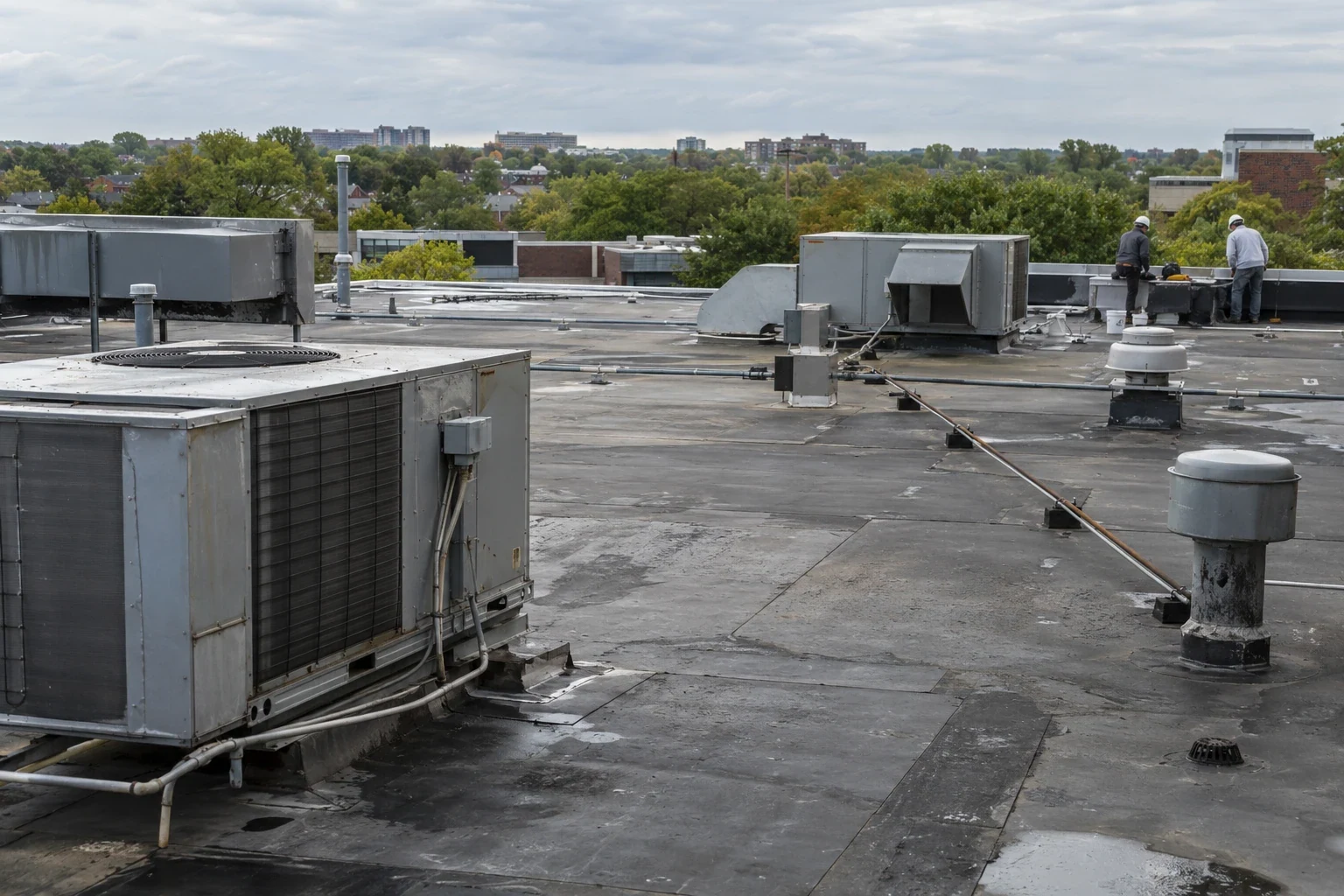
Roof repairs and multi-site planning for retail and restaurant chains in Johns Creek, GA, coordinated with store hours, tenants, and customer access.
Is the roof concern over a dining room, sales floor, stockroom, cooler, or customer entrance? We tie each finding to the affected area, set a repair boundary, and identify what needs testing. Johns Creek has retail districts at Medlock Crossing and a planned Town Center, with storefronts across Alpharetta, Roswell, Suwanee, and Peachtree Corners.
How should a chain report a roof problem?
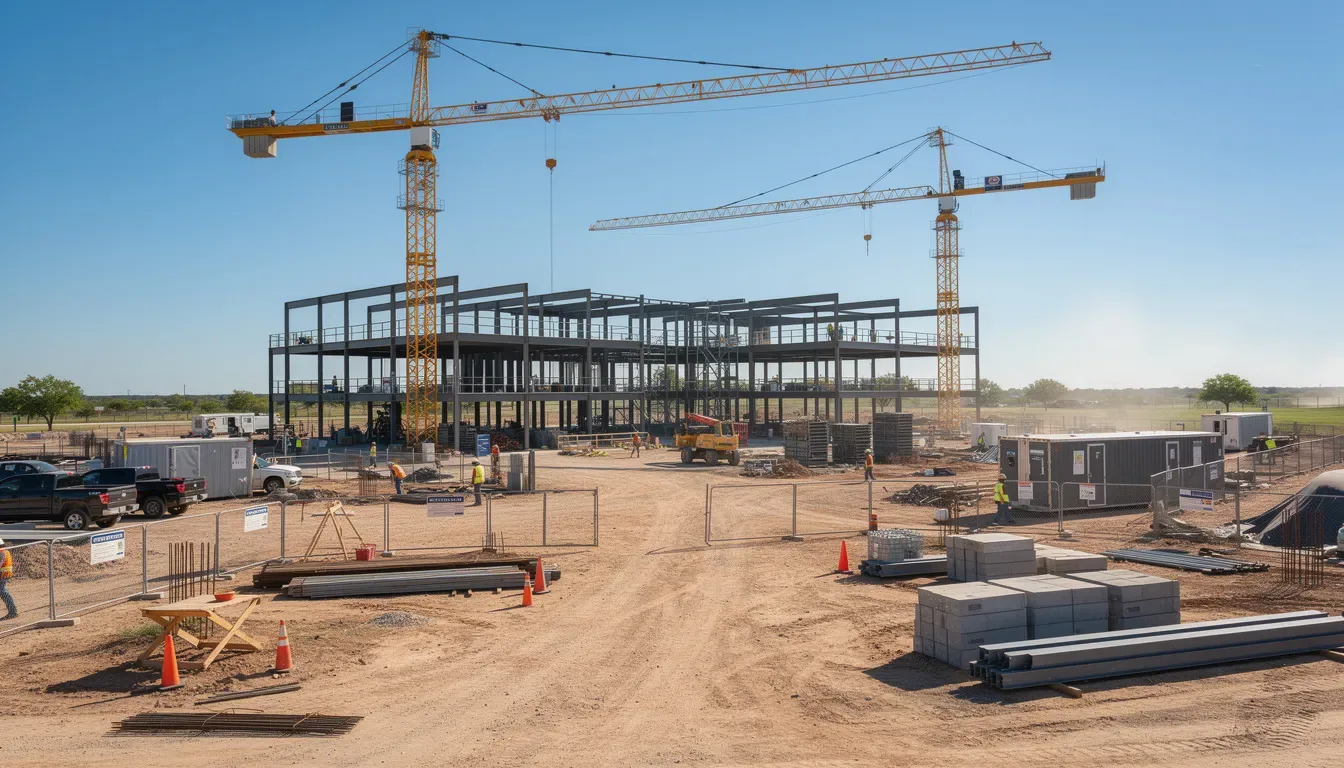
Industries We Serve from Commercial Roofers Johns Creek.
Give us the store name, suite or building, interior area, time the symptom appeared, and the local person who can arrange access. Photos from the sales floor or kitchen help identify the reported zone, but a ceiling mark does not prove that the nearest roof penetration is leaking. Water may travel along a deck or insulation joint. We inspect seams, curb flashing, drains, skylights, exhaust penetrations, edge details, and earlier patches around the likely path, then note which parts of the roof could not be reached.
A commercial roof inspection can record findings by roof zone and store. If readings support added testing, an infrared moisture survey can help prioritize locations for confirmation. The record should identify which locations were tested and how the opening was restored. Chain facilities staff can compare one store's finding against another without treating the same symptom as proof of the same defect at every location.
Roles can differ between a brand, franchisee, landlord, and shopping-center manager. Before work is scheduled, identify who controls the roof, who can authorize access, who receives customer notices, and who approves a repair. A property management company may handle landlord coordination, while the operator controls store hours and inventory protection. The proposal should name those handoffs so the crew does not arrive with an unresolved access or authorization question.
How do repairs affect customers and store hours?
We ask which entrance, pickup lane, dining area, kitchen, or merchandise zone must stay available. The site contact confirms opening and closing times, delivery windows, kitchen or sanitation periods, and where a lift or material pallet can be staged. The roof sequence states the work boundary, expected noise, temporary barriers, and daily dry-in point. If a section has to remain protected overnight, the plan says who checks it and how staff should report a change.
Medlock Crossing is a 21-acre center at State Bridge Road and Medlock Bridge Road, with a cinema and potential for mixed-use redevelopment. Confirm delivery windows, customer routes, and who controls access before placing a lift or materials.
Food-service locations need clear handoffs for exhaust, refrigeration, and sanitation. We inspect flashing around kitchen exhaust and rooftop units; the mechanical provider controls equipment isolation and restart. The operator identifies approved interior coverings and cleaning procedures for food-preparation areas.
For a sales floor, stockroom, or pickup area, the operator identifies goods and fixtures beneath the roof section. The team can move inventory or restrict a zone before work proceeds. A phased occupied-building roofing plan can keep work areas small and describe how each portion is left at the end of a shift. If a customer entrance must move temporarily, the property contact should approve the route and the operator should communicate it to customers.
When should a store repair be compared with replacement?
A single puncture, failed curb seal, or isolated seam may have a defined repair when the surrounding material remains secure. Repeated leaks, wet insulation beyond the reported bay, deteriorated attachment, or multiple failed details may justify a broader repair or replacement comparison. We separate observed defects from areas that have not been tested. The scope identifies location, quantity, material, access, disposal, interior protection, and any allowance for concealed conditions.
If water threatens a point-of-sale area, stock, food equipment, or electrical systems, temporary protection may be needed while a permanent scope is investigated. An emergency roof repair records what was stabilized and what still requires inspection. It does not automatically determine a permanent repair boundary. The operator and building owner can review the temporary response separately from a capital decision and decide who authorizes the next phase.
For chains, the work file should use a consistent set of fields across stores: building identifier, roof zone, reported symptom, confirmed cause if found, repair performed, and unresolved items. That makes it easier for facilities staff to spot a repeat location or identify when an old report no longer matches current conditions. A portfolio summary can prioritize a roof visit, but each store still needs its own inspection and repair quantities. Similar branding does not mean identical roof construction or ownership terms.
What should a chain do after a storm?
North and central Georgia can experience large hail, tornadoes, and damaging thunderstorm gusts. After an event, inspect roof edges, seams, punctures, and equipment at the reported store. Record visible impacts and any unsafe or inaccessible area before setting a repair scope.
Atlanta climate normals show rainfall in each month of the year. Drain performance therefore matters after ordinary rain as well as severe weather. We inspect strainers, scuppers, overflow paths, and the discharge route. A drain and scupper repair should match a confirmed obstruction or detail failure. At a retail center, the store or landlord may also identify a loading lane, accessible route, or customer entrance that needs to stay clear while runoff is temporarily managed.
A chain facilities lead can collect store reports in one format: location, date, interior symptom, photos, and current operating impact. A central list helps assign inspections by urgency, but it should not imply that all locations in a region were reviewed. If some sites show no interior symptoms, the company can still request an inspection, but the condition statement must describe only what the roofer actually observed.
What should the chain retain after work?
Keep the store and roof zone, dated photos, material used, work boundary, access limits, and open tasks in the closeout. Note whether the action was temporary or permanent and who must complete any mechanical or landlord handoff. If a warranty applies, retain the issued document and the requirements stated there. A later store manager should be able to identify the roof section and understand which area was not part of the job.
Johns Creek Town Center is planned for mixed use, while Medlock Crossing is an existing shopping center with potential for change. Confirm who owns the building and approves roof work. A retailer near Medlock Bridge Road near Medlock Crossing can arrange an inspection with its property contact and store manager where access allows.
Multi-location brands can group visits across hospitality groups or other related property portfolios when one facilities team coordinates them, but each roof needs a separate finding. A roof condition report can help retain that history. The chain can then compare repair needs by location, set a budget review date, and keep customer-service decisions distinct from the technical basis for roofing work.
Commercial Roofing Questions
Can a store stay open during a roof repair?
We define the work boundary, customer route, equipment staging, and daily closeout point with the store and property contacts. They set operating restrictions, and the roofing sequence reflects those requirements.
Who authorizes work in a leased retail space?
That depends on the lease and property arrangement. Confirm roof ownership, landlord approval, store access, and who pays for the work before scheduling a repair that affects the roof assembly.
Can one roof survey cover every location in a chain?
A program can organize locations and reporting, but each building needs its own inspection findings, roof area, test limits, and quantities. The chain summary should link back to those site records.
What should a manager do when water appears during business hours?
Protect people and merchandise using the store's procedures, record the time and affected area, and notify the responsible facilities contact. The roof inspection then confirms what detail needs repair.
Back to Industries We Serve, or request a roof assessment and call 555-555-5555.