
Commercial roofing in Johns Creek, GA
Repairs, replacement and maintenance
Commercial TPO Roofing in Johns Creek, GA
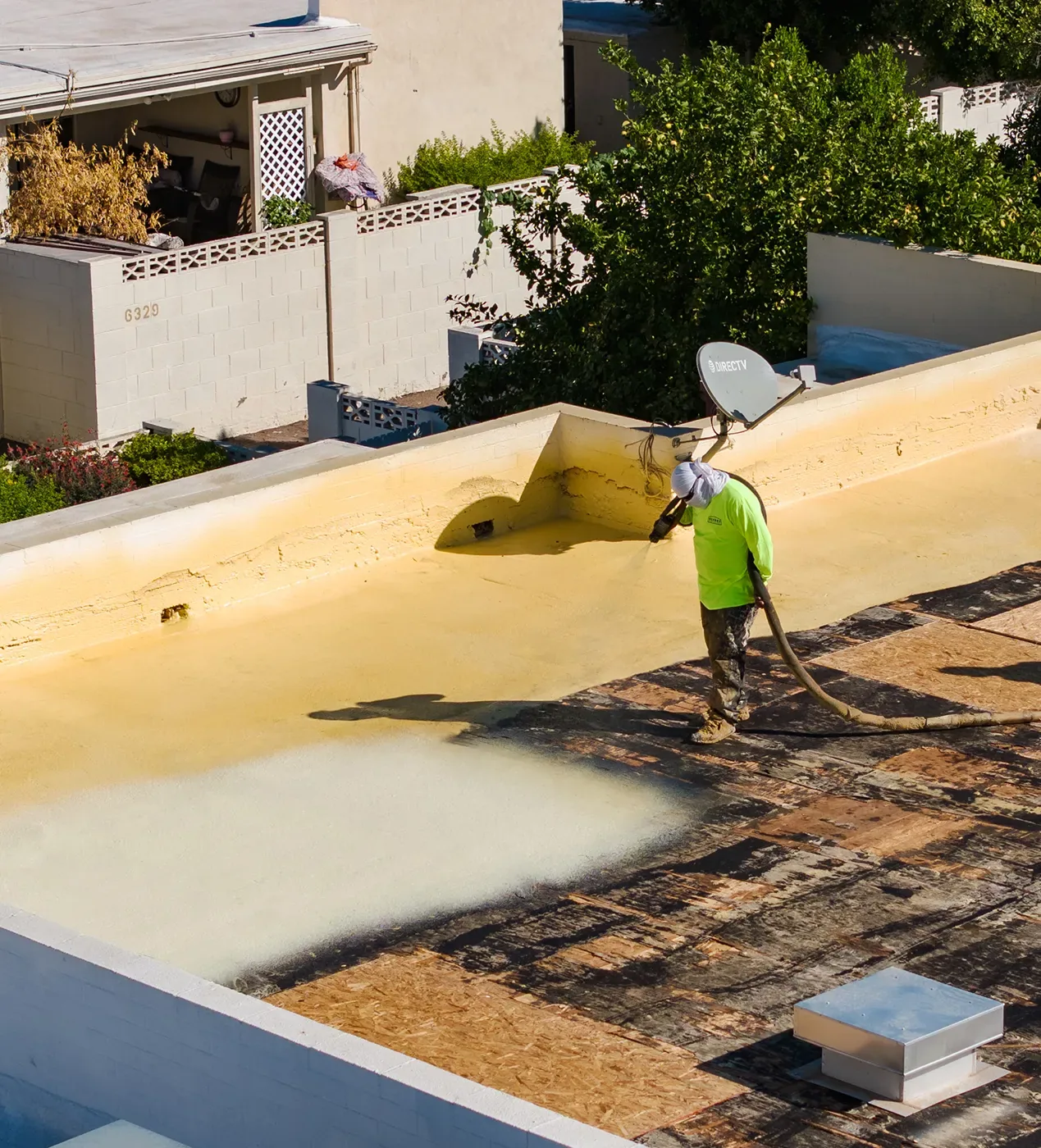
Plan a Johns Creek TPO roof with seam testing, attachment review, drainage checks, and clear limits for occupied-building installation.
Does the existing roof call for a TPO repair, a recover, or a new membrane? The answer starts at the seam, the drain path, the curb flashing, and the insulation below the sheet. TPO is a thermoplastic single-ply membrane, commonly installed in broad sheets with heat-welded seams. Its performance depends on sound substrate, secure attachment, finished details, and routine inspection. Johns Creek has office, retail, industrial, and healthcare properties, so the installation plan has to reflect the roof assembly and building operation in front of us, not a generic system description.
What does the existing TPO show?
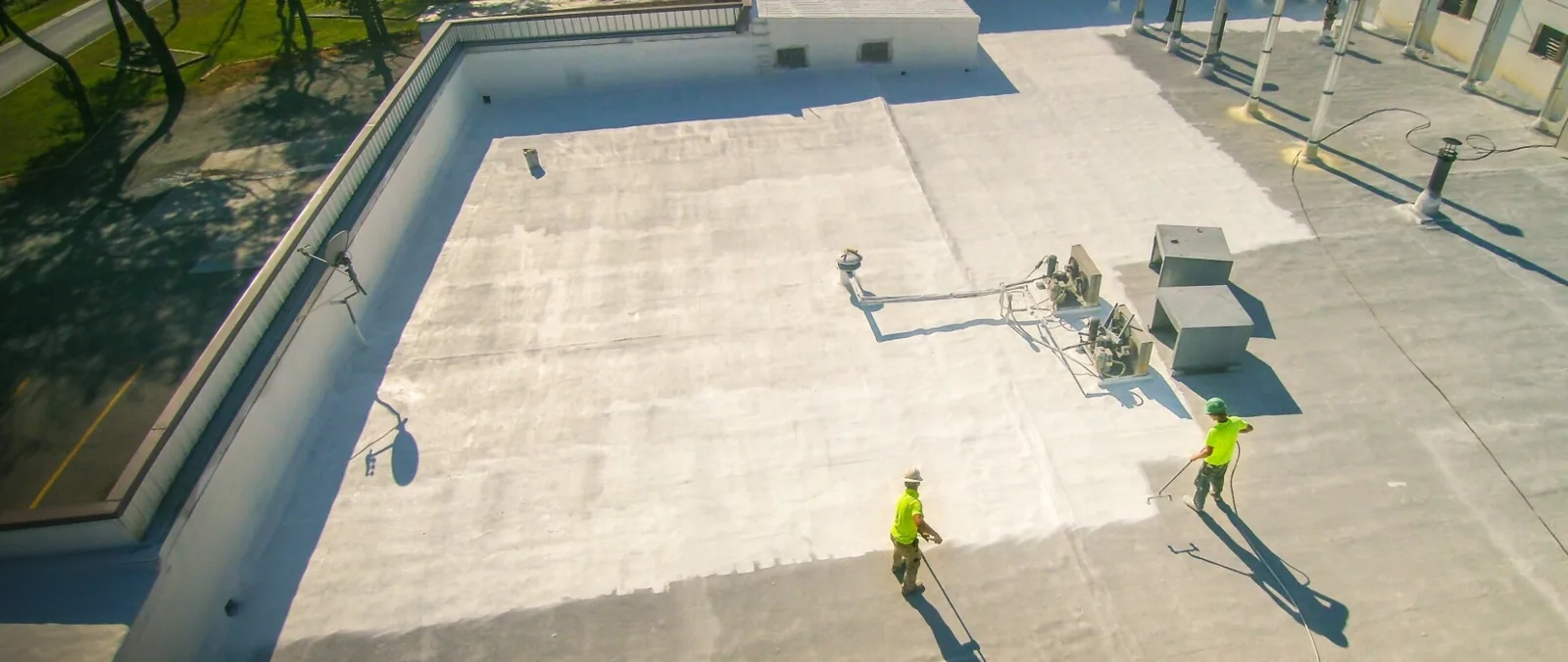
Roof Systems from Commercial Roofers Johns Creek.
We check seams for incomplete welds, contamination, fishmouths, splits, and separation where sheets meet flashings. At penetrations, we inspect boots, corners, curb transitions, and termination bars, then follow the drain path for debris or recurring ponding. A visual review may not reveal moisture in the insulation. When the assembly suggests a concealed problem, a test cut or infrared moisture survey can help define the affected roof zone before the repair boundary is set.
A patch should extend to material that can be prepared and welded correctly. We record the defect, the repair limit, and any condition that remains outside the tested area. The commercial roof inspection can document a broader set of findings and help locate adjacent defects. Johns Creek Town Center's planned mix of office, retail, hospitality, and housing is a reminder that access and tenant activity can matter as much as the membrane detail on an active property.
How should TPO seams be checked?
Heat welding fuses compatible membrane surfaces, but the weld depends on clean material, correct temperature, pressure, and travel speed. Installers make trial welds as conditions change and test sample seams before continuing. A finished seam should be probed after cooling, with weak or skipped areas corrected while the work remains accessible. Hand welding around corners, pipes, and curbs takes careful shaping because wrinkles can interrupt the weld or leave a channel for water.
We inspect field seams and detail transitions as separate work. A wide membrane field can appear orderly while a termination, drain, or equipment curb remains vulnerable. The proposal should identify sheet thickness and reinforcement, attachment method, seam approach, flashing materials, and perimeter treatment. TPO colors and formulations vary; the specified product and installation instructions govern. When evaluating alternatives, compare the detail requirements for PVC membrane systems and EPDM roofing against the actual project. We do not assume that any sheet marked TPO is interchangeable with another brand or compatible with an older membrane without confirmation.
What secures the membrane?
A TPO roof can be mechanically attached, adhered, or installed as a ballasted assembly where the design allows. The correct approach depends on the deck, insulation, building geometry, project requirements, and tested uplift design. We inspect the deck and existing layers, then document fastener patterns or adhesive requirements in the proposed assembly. Edge zones need particular attention because perimeter metal and membrane termination work together to resist wind forces. A field sheet can remain intact while a termination lifts, so we inspect the edge connection and substrate instead of inferring damage from a regional warning.
If attachment is uncertain, a test or design review may be needed before pricing is final. Wet insulation, loose boards, or corrosion at the deck can change the fastening plan and removal limits. A cover-board and insulation scope can be coordinated with the membrane, while an edge-metal review confirms the perimeter transition. The written scope should say which conditions are included and how concealed findings become an approved change order.
When can TPO work proceed?
Adhesive, welding, and temporary dry-in each have different weather limits. The crew checks surface and air conditions against product requirements, protects open roof zones, and limits daily production to what can be completed safely. Atlanta records rain across the calendar and many hot afternoons. For a heat-welded membrane, sunlight and shade can change the sheet temperature enough to require a fresh test weld and a setting adjustment before the crew continues.
Cold mornings can affect handling or adhesive set, while summer heat can raise the membrane and metal temperatures above comfortable working conditions. We plan staging and breaks around the actual conditions and keep the building protected when work pauses. A roof near Technology Park Johns Creek may have multiple rooftop units and scheduled access rules; our staging plan follows the site's access limit rather than obstructing equipment service. If rain moves into the work window, the crew finishes tie-ins and protects exposed insulation before shifting to another roof zone.
Can a damaged TPO roof be recovered?
A recover is only suitable where the existing assembly is dry enough, stable, and allowed to remain under the new work. We inspect the membrane, take samples where needed, and check attachment and drainage before recommending another layer. If wet insulation, soft deck, trapped moisture, or widespread bond failure is found, covering it can conceal rather than correct the condition. A roof recover evaluation should identify the layers that remain and the areas that need selective removal.
Repairs may be the better fit when defects are isolated and the surrounding sheet can accept a compatible weld. If seams are failing throughout multiple zones, repeated patches can become a poor substitute for a broader assembly plan. We compare localized repair, recover, and replacement using the same roof map and documented findings. The Johns Creek team should be able to see where each option begins, what it includes, and what evidence would change the recommendation.
How will work affect building operations?
Material delivery, rooftop access, equipment shutdowns, noise, and daily dry-in limits affect the sequence. We divide work into roof zones and confirm where the crew can stage without blocking service routes or occupied areas. Peachtree Corners includes technology, life-sciences, healthcare-services, manufacturing, and logistics employers; this neighboring business mix underscores why access and equipment coordination are set building by building. The local context does not establish any individual roof condition, so the walk-through and operations meeting remain necessary.
Closeout should include installed product information, photographs of representative seams and flashings, repairs to concealed substrate, and areas excluded from the work. We also record any maintenance instruction or open item the owner needs to track. A roof condition report can connect installation findings with later inspections, and our Peachtree Corners service area supports owners coordinating nearby properties. Send the roof plan, leak history, access rules, and decision date so we can inspect the assembly and scope the work around confirmed conditions.
Commercial Roofing Questions
How long can a TPO membrane last?
Service life depends on the assembly, exposure, installation quality, maintenance, and how quickly defects are addressed. We inspect seams, flashings, drains, and the membrane surface, then record what is observed. A product name alone cannot establish the condition or remaining service life of a specific roof.
Can a TPO seam be repaired after it separates?
A sound repair is possible when the surrounding membrane is clean, compatible, and large enough to prepare for a new weld. We probe the separation, check adjoining details, and test the repair after it cools. If the sheet is degraded or the insulation is wet, the scope may need to extend beyond the visible opening.
Does TPO work on an occupied Johns Creek building?
Phasing can keep many operations open, provided access, noise, deliveries, and equipment needs are coordinated. We set daily work zones with the property contact and protect exposed areas before leaving the roof. The actual schedule depends on building use, roof access, weather, and the sequence required to maintain dry-in.
What affects the cost of a TPO roof?
Removal depth, deck repairs, insulation, attachment, edge details, equipment curbs, roof access, and disposal all affect the scope. We identify assumptions and allowances in writing. If tear-off exposes a condition that was not visible, the owner reviews the finding and change before added work proceeds.
Can TPO go over an older membrane?
Existing layer count, moisture, attachment, compatibility, and code requirements set the recover limits. We inspect and test representative areas before recommending it. An unstable or wet assembly needs a different correction so the new membrane does not conceal an unresolved problem.
Back to Roof Systems, or request a roof assessment and call 555-555-5555.