
Commercial roofing in Johns Creek, GA
Repairs, replacement and maintenance
Commercial PVC Roofing in Johns Creek, GA
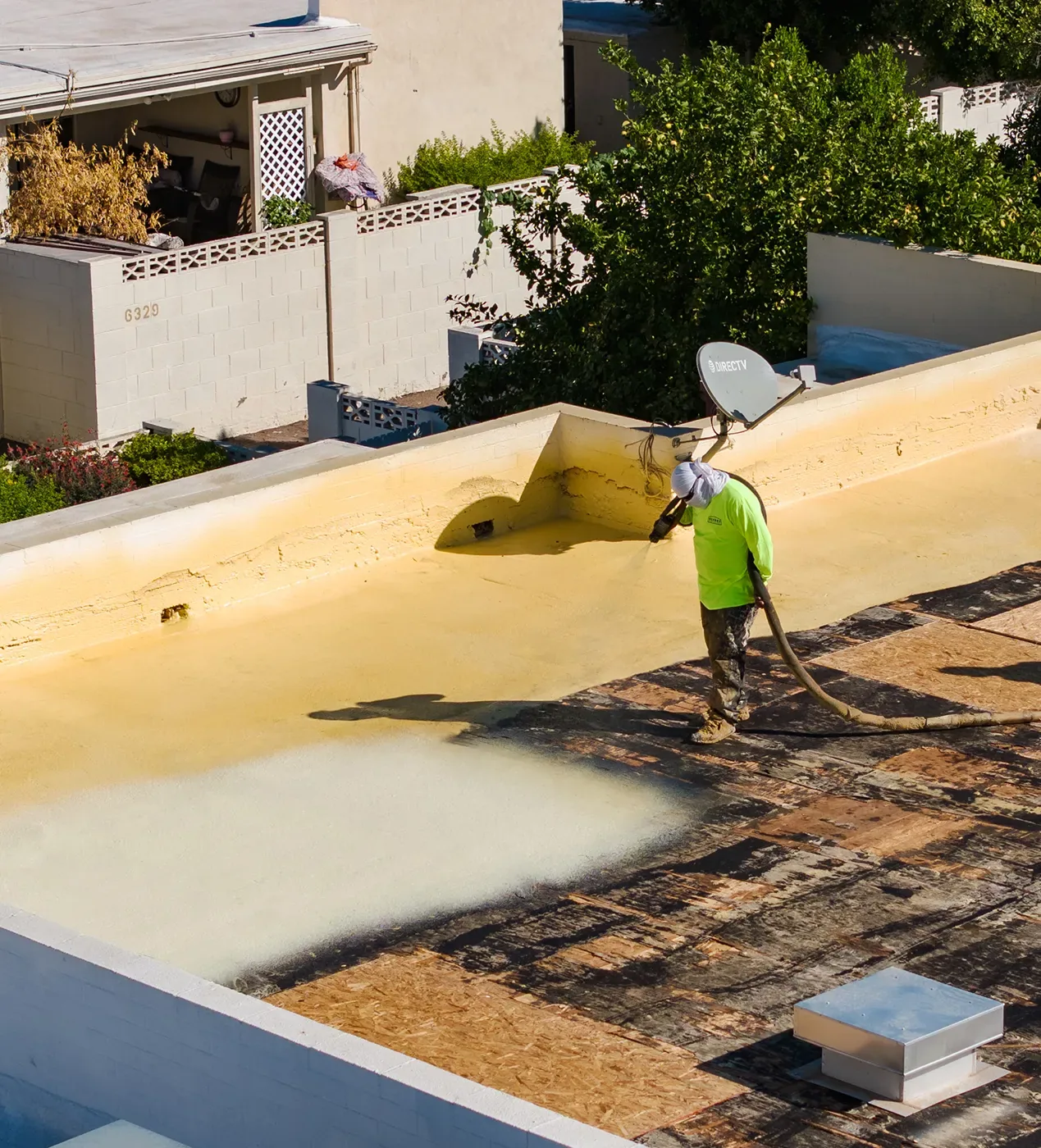
Assess a Johns Creek PVC roof for membrane compatibility, heat-welded seams, flashing details, drainage, and practical work limits.
Is PVC the right membrane for the building's roof zones and rooftop use? Start with the deck, slope, drains, penetrations, and any material exposure that could affect the sheet. PVC is a thermoplastic single-ply roof membrane joined with heat-welded seams. The selected assembly still needs compatible insulation, secure attachment, sound flashing, and a realistic maintenance plan. Commercial roofs near Johns Creek Town Center serve office, retail, hospitality, and residential uses, but that district context does not tell us what membrane any one property has. The inspection establishes the actual assembly and its condition.
What makes PVC different?
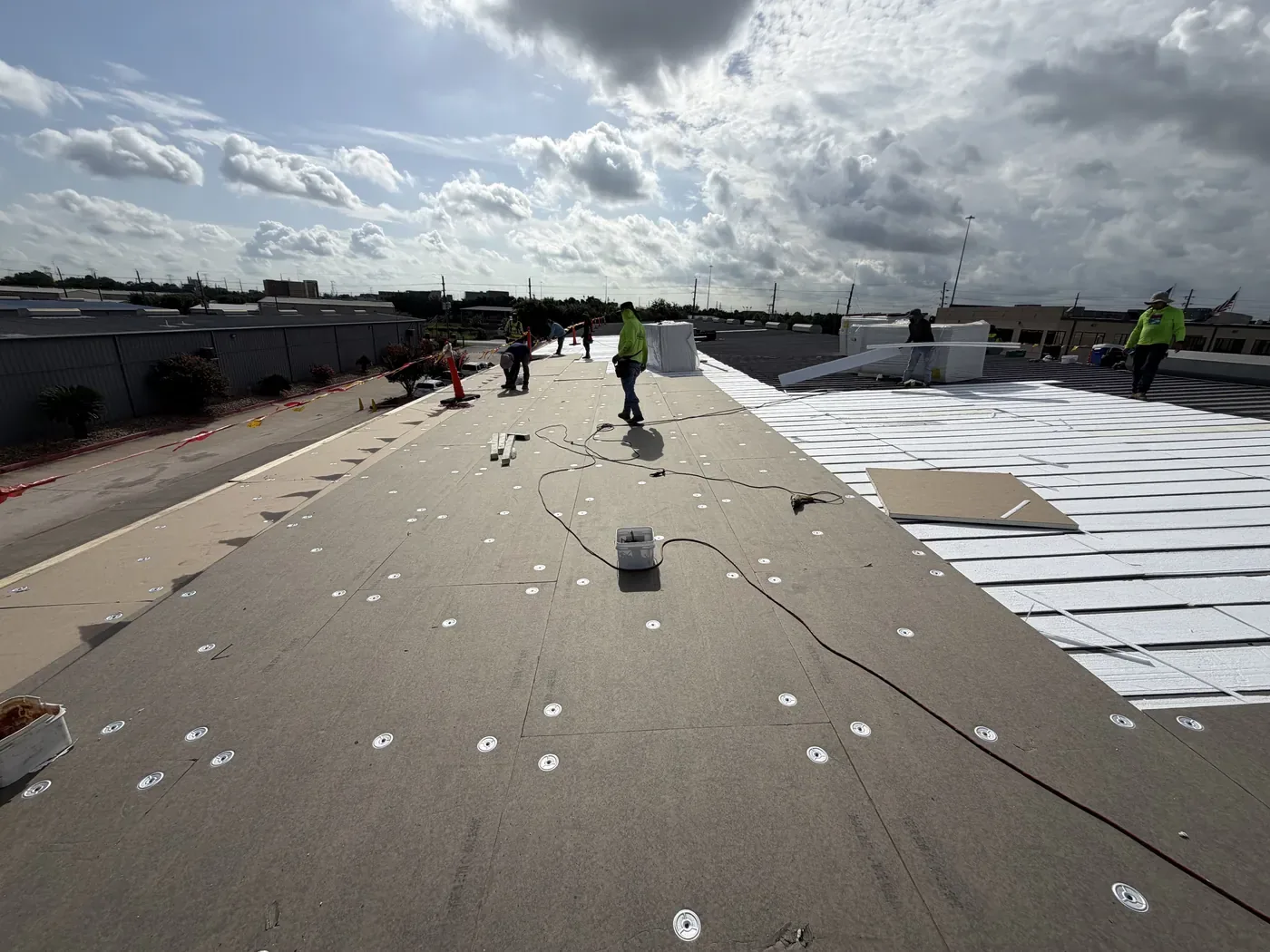
Roof Systems from Commercial Roofers Johns Creek.
PVC membrane contains plasticizers that keep the sheet flexible. Product formulations vary, so the specification should identify the manufacturer, reinforcement, thickness, and approved accessories. PVC systems are often considered where roof exhaust, grease, or other chemical exposure needs review, but chemical resistance is product-specific and does not replace checking the source, concentration, temperature, and exposure pattern. We confirm those details before selecting a membrane. Where exposure is uncertain, the owner may need a manufacturer compatibility review before materials are ordered.
Do not treat PVC and TPO as interchangeable because both can have heat-welded seams. Their formulations, cleaners, adhesives, flashings, and accessory requirements differ. The contract should name the chosen system and the materials intended at field sheets, corners, drains, expansion joints, and equipment curbs. A side-by-side TPO assembly review can help compare the proposed detail set, while a KEE membrane option may be considered where the specified alloy formulation fits the exposure and project requirements.
Where can a PVC roof lose watertightness?
Field welds are only one part of the inspection. We look for incomplete seam fusion, contamination, fishmouths, punctures, shrinkage, and splits where sheet transitions meet flashings. At drains, the membrane must terminate securely and stay clear of the opening; at curbs and penetrations, corners and pipe boots need to remain tight. Movement, poor substrate support, rooftop traffic, and repairs using incompatible materials can all complicate a small leak. We photograph the observed condition and map the roof zone before deciding how far a correction should extend.
A repair method depends on the existing formulation and its condition. The crew cleans and prepares the sheet as specified, makes a controlled weld, allows it to cool, and probes it to confirm continuity. If the membrane is heavily weathered or contaminated, a sample weld can show whether a repair is practical. A hands-on inspection can document repeat defects and identify whether the next step is a localized patch, a larger repair, or replacement of an area.
How should the roof assembly be specified?
The membrane is one layer in a roof assembly. Deck type, insulation, cover board, attachment, vapor control, drainage, edge metal, and curb heights all affect the finished system. We review the existing layers and conditions at representative points, using test cuts if moisture or deck deterioration is a concern. The plan should show how the membrane meets parapets, drains, skylights, and equipment supports. If the finished roof raises elevations, the detail must preserve drainage and leave enough flashing height at transitions.
Georgia's mandatory state minimum building code includes the 2024 International Building Code with Georgia amendments. Effective dates and project-specific requirements should be confirmed with the local building official and design team. We coordinate product data, attachment, insulation, and required approvals as part of the scope. The insulation and cover-board selection should match the PVC system rather than be treated as a separate shopping line. Perimeter conditions also warrant a defined edge and coping detail.
What conditions control installation?
Weld quality depends on surface cleanliness and stable settings as the crew moves from sunny roof fields to shade, wind, and changing temperatures. We make test welds as conditions change and do not weld wet or dirty sheet. Atlanta climate normals record precipitation in every month; rain protection and a daily dry-in limit belong in the work plan. Actual substrate temperature and the product instructions control the day's installation window. Prepared surfaces left exposed need protection before the crew moves elsewhere.
North and central Georgia also experience damaging thunderstorm winds, hail, and tornadoes. That regional pattern is a reason to inspect after severe weather, not proof of damage on a specific property. Around Medlock Bridge Road near Medlock Crossing, commercial buildings and access constraints differ by property; we agree on delivery points, pedestrian protection, roof access, and equipment shutdowns with the site contact before work starts.
Repair, recover, or replace?
Isolated damage in clean, weldable material may support repair. Broad seam distress, repeated leak history, wet insulation, or an unstable deck can point to a wider project. A recover may be suitable only if existing layers are dry, attached, and allowed to remain. We use inspection findings and test results to mark where each option applies; no single stained ceiling or coating over the sheet settles the decision. The recover review should identify retained materials, removal zones, and details that need rebuilding.
Scope clarity matters when concealed conditions could affect price. The estimate states removal limits, material assumptions, deck or insulation allowances, edge work, and the approval route if tear-off reveals something different. A change order should connect to a documented finding. Atlanta climate normals show precipitation in every month, so a project in Johns Creek needs secure open-roof protection and completed tie-ins throughout the schedule. We sequence manageable areas, secure the membrane at day's end, and record any section that needs follow-up.
What should the owner receive?
Closeout should identify the PVC product and accessories installed, the roof zones completed, photos of critical transitions, and any excluded or deferred work. Maintenance instructions matter because rooftop traffic, new equipment, and drain blockage can damage a membrane after installation. We leave the owner a record of open items and explain how future concerns should be reported. When the project has multiple buildings, each should have its own notes instead of one summary that blurs conditions.
Send the roof plan, current system details if known, leak history, expected exhaust or chemical exposure, access restrictions, and the decision date. We will inspect the sheet and details, confirm compatibility questions that need a product review, and price the work around the documented repair boundary. For multi-property planning, the owner receives site-specific findings and the completed work record.
Commercial Roofing Questions
Is PVC more suitable around grease exhaust?
It can be considered where exhaust exposure makes chemical resistance relevant, but the formulation and conditions matter. We identify the source and exposure pattern, then confirm compatibility against the proposed product requirements. A product label alone does not answer a compatibility question.
Can a PVC seam be rewelded?
A repair can work when the existing sheet is compatible, clean, and in condition to accept a weld. We prepare a test area when needed, make the repair, and probe it after cooling. Deteriorated or contaminated membrane may require a larger replacement patch or a different scope.
Will a PVC roof stop leaks at rooftop curbs?
Water entry at a curb can come from corners, termination, the curb itself, or the adjoining roof field. We inspect the entire transition and nearby drain path before selecting a repair. New membrane alone will not correct movement or an unstable substrate below the flashing.
How is PVC attached to the roof?
The design may call for mechanical attachment, adhesive, or another approved configuration based on deck, geometry, tested uplift, and project requirements. We show the intended attachment and perimeter treatment in the scope. A deck or insulation finding can change that design and should be resolved before installation.
What if testing finds wet insulation under PVC?
The affected area is mapped and the removal boundary is reviewed before the membrane is closed. Wet materials may need selective replacement, with adjacent areas tested where evidence suggests moisture could continue. The proposal should state how added removal is documented and approved.
Back to Roof Systems, or request a roof assessment and call 555-555-5555.