Commercial roofing in Johns Creek, GA
Repairs, replacement and maintenance
Commercial Roof Repair in Johns Creek, GA
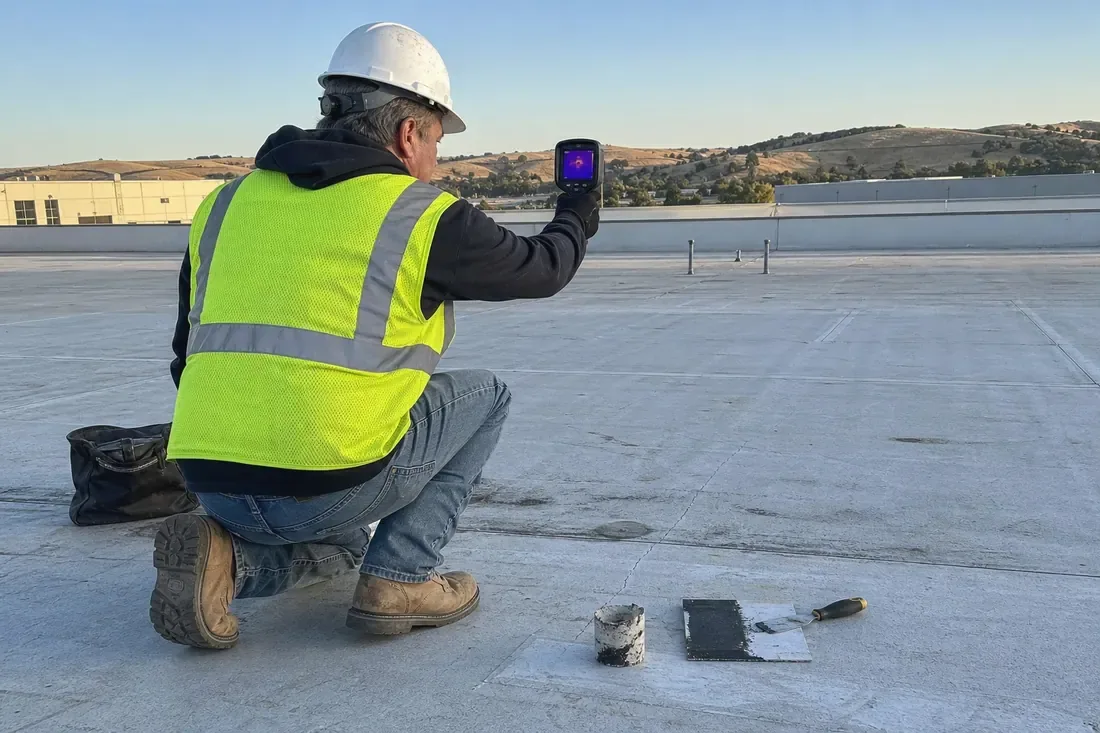
Repair commercial roof seams, flashing, and membrane in Johns Creek with documented findings, a defined repair boundary, and a clear closeout record.
A roof repair should have a visible boundary. We locate the failed detail, inspect the surrounding roof zone, and record what the repair will correct. A patch that stops at the stain may miss an open seam, loose curb flashing, split membrane, or drain problem several feet away. In Johns Creek, commercial roofs serve healthcare, life-sciences, office, retail, and industrial buildings, each with different rooftop equipment and operating limits. The proposal should name the observed condition, repair material, access limits, and what would trigger additional work.
What failed, and where does it stop?
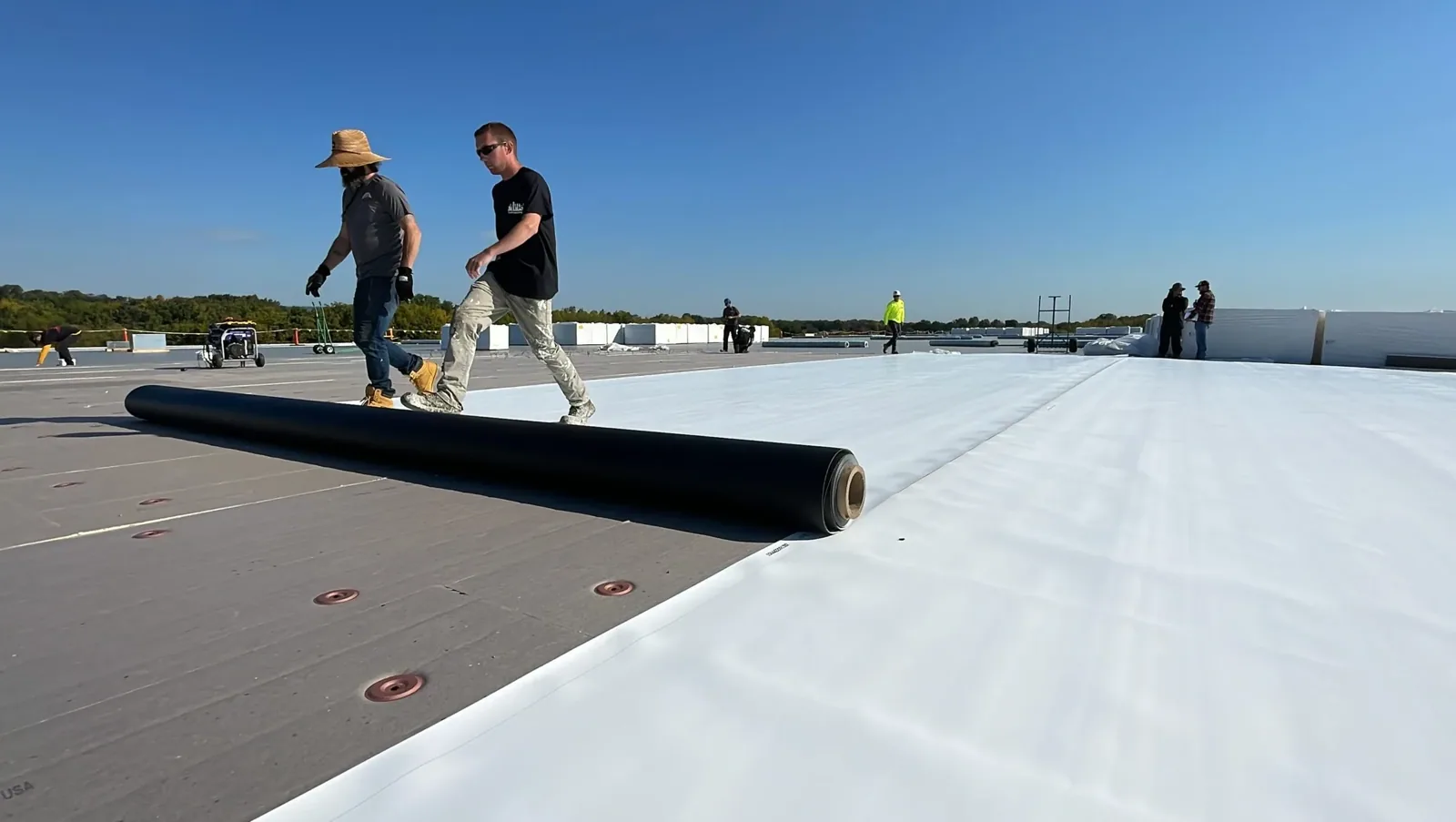
Commercial Roofing Services from Commercial Roofers Johns Creek.
We examine the reported leak or damage and then trace the likely water path across the roof. The entry point may be at a seam, penetration, curb, coping joint, drain, or transition to an older addition. We check the nearby membrane for movement, punctures, previous patches, trapped debris, and signs of moisture. Water can travel along insulation or framing before it shows indoors, so the ceiling stain is a clue rather than the repair boundary.
Across Technology Park Johns Creek, office properties share the campus with shops, civic uses, and industrial space. On a roof with dense equipment, each curb and conduit creates a separate flashing condition; on a broader open area, seam integrity and drainage may deserve more attention. We label photos with the roof zone and describe the observed condition without guessing beyond it. If moisture is suspected below the surface, we can use a moisture survey or test cut to establish how far the wet area extends before setting the repair limits.
Which repair matches the defect?
Different failures need different fixes. A split heat-welded seam may need the membrane cleaned and re-welded; a puncture may call for a compatible patch with sound overlap; a curb leak may require new flashing and secure terminations. EPDM, PVC, TPO, modified bitumen, and metal roofs use different materials and preparation methods. We identify the existing system where possible and select repair materials that suit it. Coating over a loose edge or wet insulation does not create a sound repair.
Our leak repair service focuses on tracing active water entry, while planned maintenance can address several known defects in a coordinated visit. We state whether the work is a localized repair, a broader roof-zone correction, or further testing. The scope should also say what remains outside the repair boundary. If testing uncovers deteriorated deck or widespread moisture, we explain the finding and price the additional area separately instead of expanding the work without a documented decision.
How does local weather change the inspection?
North and central Georgia can see damaging thunderstorm winds, large hail, and tornadoes. That regional pattern makes a post-storm inspection useful, but a warning does not establish damage on one building. We photograph lifted edges, impact marks, displaced coping, punctures, and open seams, then distinguish confirmed damage from conditions that need closer testing. This creates a record that the owner can use to choose repair, monitoring, or a larger investigation.
Atlanta climate normals also show rainfall in every month and many hot days. Repeated wetting can expose a small flashing defect, while heat can affect safe rooftop access and the handling of repair materials. We check actual roof and weather conditions before work, protect any area opened during repair, and avoid leaving an unfinished tie-in vulnerable to rain. A nearby institutional site such as Technology Park Johns Creek has a broader mix of occupied uses; the repair plan still follows the building’s specific access and operations.
What should be planned before the visit?
Give us the leak location, when it appears, any recent roof work, and the route to the roof. A roof plan, photos, tenant reports, and equipment restrictions help us prepare. We confirm ladder or hatch access, fall protection needs, escorts, parking, and any controls around active equipment. For medical or life-sciences facilities, the site contact may need to coordinate rooftop access with building operations. We agree on a work window and the area that needs temporary protection.
Hot weather can shorten the safe work window on exposed surfaces, and rain can delay preparation or bonding. The schedule should reflect those conditions instead of promising a fixed repair before the surface can be made ready. If a temporary tarp or dry-in is needed, we identify what it protects and how long it is expected to remain. Emergency work may be needed first, followed by a permanent repair when conditions allow. The owner receives a clear distinction between the immediate protective measure and the final repair scope.
How is the repair closed out?
Before starting, we review the price, repair boundary, materials, access assumptions, and any testing allowance. If a hidden condition appears, we stop at the agreed limit, document the finding, and request approval before proceeding. This keeps a small repair from becoming an open-ended scope. The owner can see the evidence and decide whether to add work, defer it, or ask for another option.
At completion, we photograph the repaired seam, flashing, membrane, or drain detail and note any remaining concern. We can provide a roof condition record that ties the work to its location and observed basis. The State Bridge and Medlock Bridge commercial area includes Medlock Crossing and surrounding retail properties. A repair near active shops may need a different work window than an office or industrial roof along McGinnis Ferry Road. For a property near Medlock Crossing, identify the building and roof zone before setting a repair boundary. If the repair is near that shopping district, we check the actual property’s access rules and work window. Our planned roof maintenance can record recurring conditions between larger repair decisions. The closeout record helps a property team track what was repaired and what deserves follow-up. We also note any nearby detail that should be reviewed at the next inspection. Send the roof plan, symptom location, and access limits to schedule an inspection.
Commercial Roofing Questions
Can a roof repair be limited to the area over the leak?
Sometimes, but the visible stain alone does not define the failed roof area. We trace the water path and inspect the nearby seam, flashing, penetration, and drain conditions. The proposal shows where the repair stops and what evidence supports that boundary.
Will you match the existing roof material?
We identify the installed system and use compatible materials and preparation methods when the roof condition allows. TPO, PVC, EPDM, modified bitumen, and metal repairs differ. If the existing membrane cannot be confirmed, we note that limit and test before selecting a patch system.
What happens if the repair uncovers wet insulation?
The affected zone is documented and the work pauses at the approved repair limit. We can test nearby areas, mark the wet boundary, and price removal or replacement as a separate decision. Covering wet material without addressing it may leave the underlying cause in place.
Can hail or wind damage be assumed after a storm?
No. Regional severe weather provides a reason to inspect, not proof that a roof was damaged. We document observed conditions such as displaced metal, punctures, lifted edges, or impact marks, and identify what requires closer evaluation.
What information helps you schedule a repair?
Send the leak location, timing, photos, roof plan, recent repair history, roof access route, and any operating restrictions. We use those details to prepare the inspection and confirm a workable window. If the building needs temporary dry-in, describe the active water entry and affected interior area.
Back to Commercial Roofing Services, or request a roof assessment and call 555-555-5555.