
Commercial roofing in Johns Creek, GA
Repairs, replacement and maintenance
Commercial KEE Roofing in Johns Creek, GA
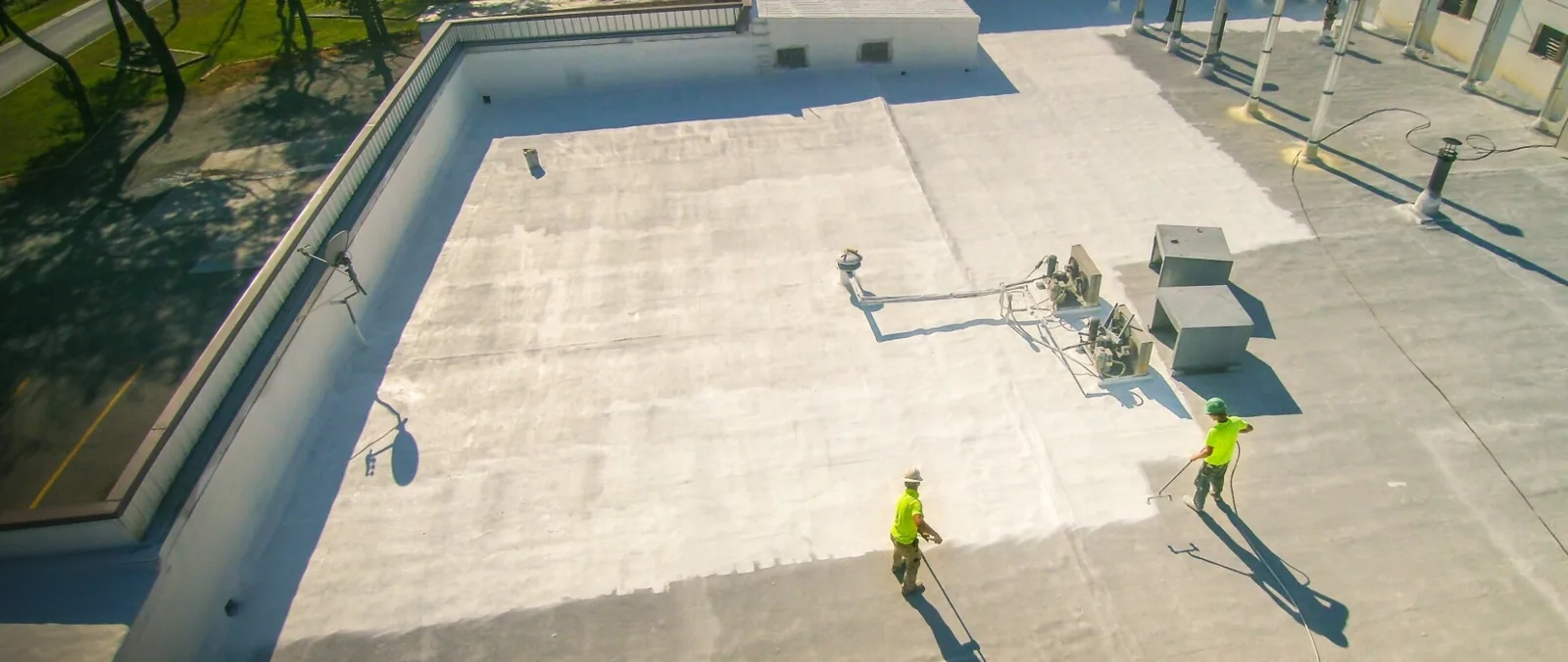
Review a Johns Creek KEE roof for PVC-alloy formulation, weld quality, chemical exposure, flashing compatibility, and repair options.
Does a KEE membrane fit the roof's exposure and repair history? KEE is a PVC-based alloy membrane, but product formulations differ and the alloy designation alone does not settle compatibility or service expectations. We identify the installed product, inspect its seams and details, and compare the exposure with the manufacturer's written requirements. Properties around Johns Creek Town Center span planned office, retail, hospitality, and residential uses, while nearby Medlock Crossing is a commercial district; the roof assembly at each property still needs its own inspection before a scope is priced.
What does KEE mean for the specification?
Roof Systems from Commercial Roofers Johns Creek.
KEE membranes combine PVC with a ketone ethylene ester alloy. Formulations, reinforcement, thickness, and accessory systems vary by product. The project documents should state the exact membrane and compatible primers, flashing materials, adhesives, cleaners, and repair products. A generic reference to KEE is not enough to order materials or promise that a repair product will bond to an older sheet. We verify what is present, including prior patches and any coating or surface treatment.
KEE should not be assumed equivalent to every PVC sheet, even though both are thermoplastic and can use welded seams. A PVC system comparison can clarify specified components and detail differences. For projects comparing broader membrane options, a TPO assembly review provides a separate thermoplastic specification to assess against the roof's actual service conditions. The owner should see the named products and accessory details in the submittal before installation begins.
Which conditions should be documented?
We inspect the field membrane for punctures, open seams, surface wear, patches, and damage from foot traffic or equipment work. At curbs, walls, drains, and edges, we look for loose flashing, incomplete welds, movement, and transitions between different materials. A test weld can show whether a prepared area accepts a compatible repair, but a small sample says nothing about every roof zone. When moisture may be concealed, infrared mapping or test cuts can help locate the boundary before pricing removal.
Johns Creek's commercial base includes office, retail, industrial, healthcare, and life-sciences uses. That mix makes access and mechanical equipment coordination relevant, though it does not reveal what any specific roof contains. We label findings on a roof plan and photograph the relevant detail. A commercial inspection can put the observed condition and open questions in one record. For roofs with repeated water entry near a penetration, a penetration and skylight flashing review may be included in the investigation.
How is a KEE seam repaired?
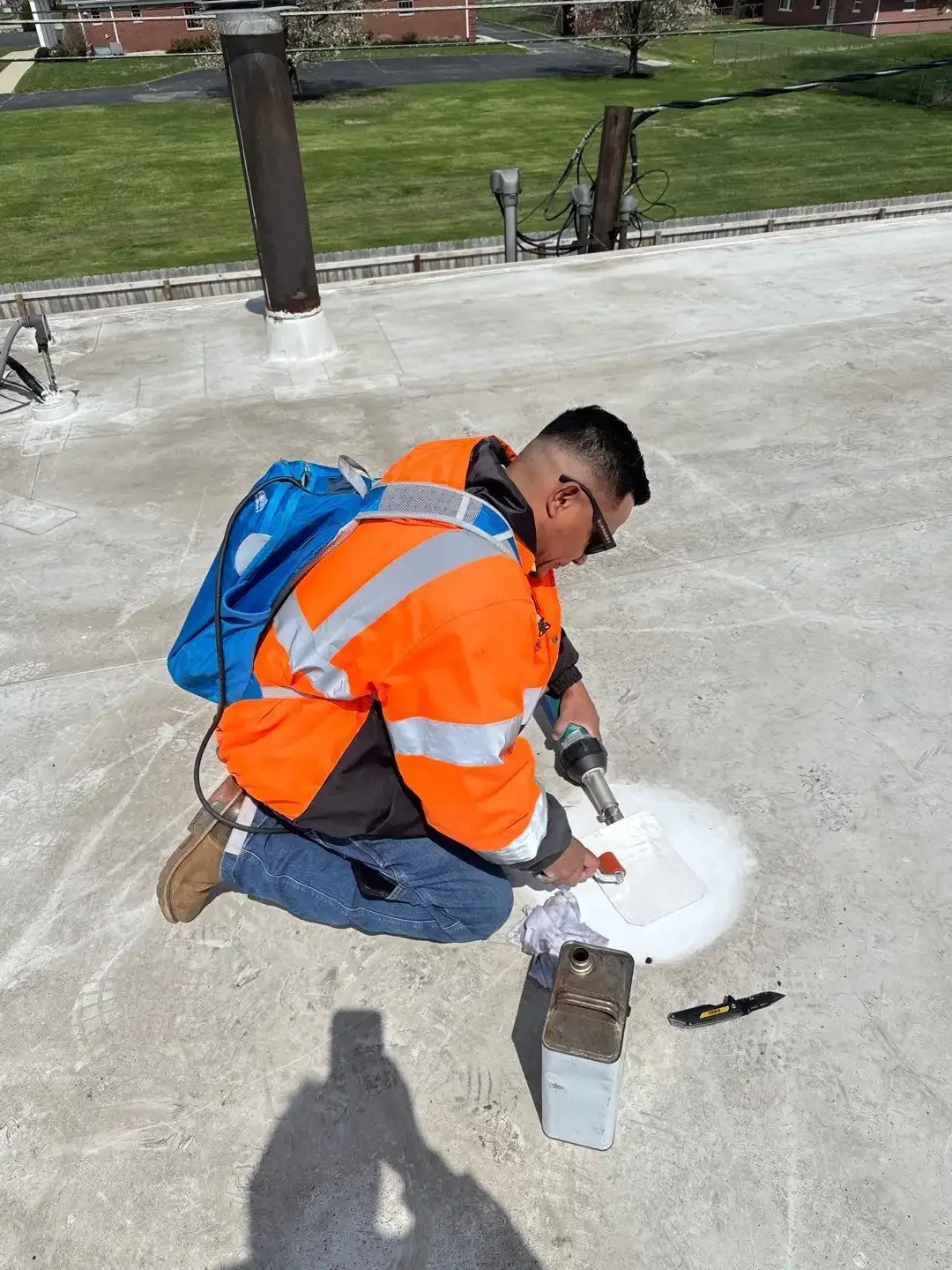
Thermoplastic seams are heat welded, and reliable fusion calls for clean surfaces, controlled heat, pressure, and a suitable work window. We make trial welds when conditions or membrane age change, then check the sample after it cools. Finished field seams can be probed to find skips or weak spots. At corners and penetrations, the sheet must be shaped without folds that channel water beneath the detail. Welding over dirt, moisture, or incompatible repair residue can produce a weak connection even when the seam appears smooth.
The repair plan describes the surface preparation, patch configuration, flashing material, and inspection step. A patch that hides a split at the edge without restoring securement leaves the stress in place. We also check the adjacent field for punctures or signs of movement. If the sheet is too degraded for a dependable weld, the scope may call for a larger replacement area or a new assembly rather than repeated small repairs.
Does roof exposure change the choice?
Industrial exhaust, kitchen grease, chemicals, rooftop traffic, and equipment vibration can affect membrane selection or maintenance. We gather the actual exposure information, including source, location, and expected contact, then compare it with the product's data. No membrane should be selected solely from a general claim about chemical resistance. If the building's process changes, the roof plan may need a revised protection or inspection schedule around discharge points and service routes.
North and central Georgia's climate includes severe thunderstorms with damaging wind, hail, and tornadoes. After a storm, we inspect edges, flashings, punctures, and displaced equipment rather than treating the weather alert as proof of damage. Atlanta's climate record has precipitation in each month, so drains and low points stay relevant outside of storm season as well. A storm inspection and repair scope can separate fresh impact from prior wear and document any temporary protection required.
What belongs in the installation plan?
Before a new KEE roof is installed, the scope should identify the deck, insulation, cover board, attachment, membrane, edge treatment, drains, and flashing transitions. Georgia's state minimum code includes the 2024 International Building Code with Georgia amendments; project dates and requirements should be checked with the local building official. We coordinate the roof details with the approved design and material submittals. Any existing wet insulation or damaged deck found during removal should be mapped and handled through an agreed allowance and approval path.
Atlanta normals record many days with highs at or above 90 degrees and regular overnight freezes. Those conditions affect safe rooftop work and material handling, but actual deck and air temperatures govern whether work can proceed. We stage manageable areas, maintain dry-in, and protect completed tie-ins. Near Johns Creek Town Center, planned mixed-use activity makes access, deliveries, and occupied operations worth confirming early, but the sequence is set for the specific property's constraints.
What should remain on file?
Keep the product designation, installed materials, work zones, photographs, tested areas, and maintenance directions with the building records. The closeout should identify any excluded roof zone or repair that remains pending. This matters when different vendors service equipment later or the property changes hands: a future reviewer can see which membrane is present and what was actually corrected. We list unresolved concerns plainly instead of treating a finished invoice as a full condition report.
Send the roof plan, known product information, leak history, chemical or exhaust exposures, access limit, and target date. We can inspect representative details, test compatibility where required, and prepare repair or replacement limits for review. A roof condition report preserves the findings, while our Peachtree Corners service area supports nearby site coordination when an owner is managing more than one property.
Commercial Roofing Questions
Is every KEE membrane the same?
No. Formulation, reinforcement, thickness, accessories, and installation instructions vary among products. We record the installed designation and confirm repair materials against the actual sheet. A broad product category should not replace a manufacturer-specific submittal.
Can KEE be repaired with ordinary PVC accessories?
Compatibility needs to be confirmed for the exact membrane and accessory. We inspect the product markings or records, review manufacturer instructions, and prepare a sample where needed. The repair scope should name the materials approved for that interface.
What does a test weld tell the owner?
A test weld shows how a prepared sample area responds to the selected heat and pressure settings under current conditions. It does not certify all seams or reveal moisture below the membrane. We record where the sample was made and still inspect the broader roof zone.
When does a KEE roof need more than a patch?
Widespread seam separation, wet insulation, unstable attachment, or repeated leakage may call for a larger repair or a replacement evaluation. We map the observed damage and test where conditions are concealed. The owner receives defined removal and repair boundaries before approving expanded work.
Can KEE work be scheduled during hot weather?
The crew follows the membrane and accessory limits for surface and air temperature, while also managing heat exposure on the roof. We check actual conditions and break the installation into sections that can be completed and protected. A calendar date does not override a surface that is too hot or a forecast that prevents proper dry-in.
Back to Roof Systems, or request a roof assessment and call 555-555-5555.