
Commercial roofing in Johns Creek, GA
Repairs, replacement and maintenance
Commercial Roof Replacement in Johns Creek, GA
Plan a commercial roof replacement in Johns Creek with a documented assembly review, phased work plan, and clear limits for concealed conditions.
Is the roof ready for replacement, or can a defined area be repaired? The answer comes from the deck, insulation, seams, drains, and repair history, not from one ceiling stain or a warning on the weather app. We inspect the roof zone by zone and record what is sound, what has failed, and where the evidence stops. In Technology Park Johns Creek, low and mid-rise offices sit beside retail and industrial uses, so replacement planning has to account for different equipment, access, and operating hours on each building. The written scope should identify the assembly, removal limits, tie-ins, protection plan, and the conditions that would change the work.
What does the roof show?
Commercial Roofing Services from Commercial Roofers Johns Creek.
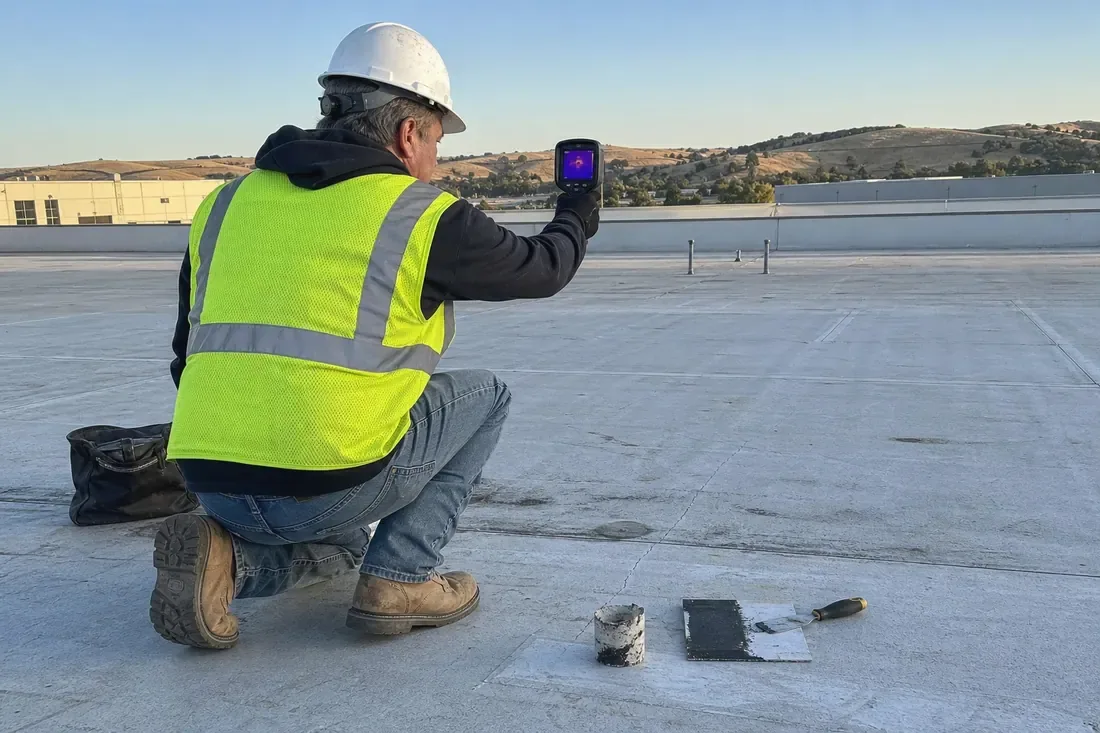
Start with the existing membrane and its details. Open seams, split flashings, repeated patches, soft insulation, ponding, and corrosion can point to different causes, so we map them before choosing a replacement approach. A hands-on roof inspection with a test cut can confirm how many layers are present and whether moisture has reached the insulation or deck. The cut also gives the owner a physical sample of what is being removed. On a large roof, the condition may vary between equipment courts, perimeter zones, additions, and areas that drain differently.
Johns Creek’s commercial base includes office, retail, industrial, healthcare, and life-sciences properties. That mix matters to the inspection because rooftop equipment, penetrations, and interior use differ from one building to the next. An office roof near GA 141 may have dense mechanical screening; an industrial building near McGinnis Ferry Road may have different access and staging needs. We photograph observed conditions and label their roof zones. The written roof condition report separates confirmed damage from areas that still need testing, so replacement limits follow evidence instead of assumptions.
Which assembly fits the building?
The replacement assembly depends on deck condition, existing layers, drainage, rooftop use, and the project requirements. TPO, PVC, EPDM, modified bitumen, built-up roofing, and standing seam metal all have different installation details. We compare the existing system with the proposed materials, attachment method, insulation, cover board, edge details, and flashing transitions. A roof recover may be possible when the existing assembly is suitable and code and moisture conditions allow it. Wet insulation, unstable layers, or deck concerns can make removal necessary.
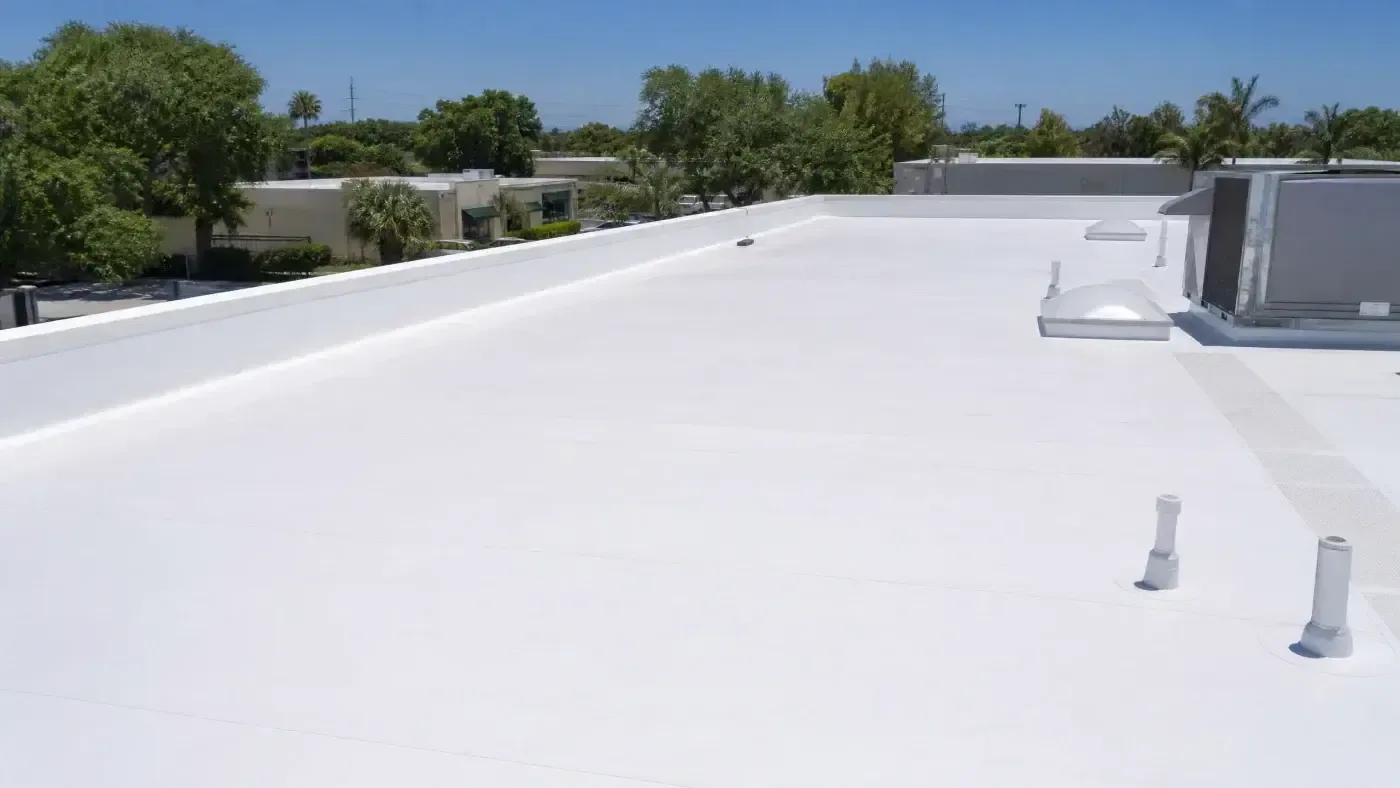
Georgia’s mandatory minimum code includes the 2024 International Building Code with state amendments, but the applicable requirements and effective date should be confirmed with the local building official for the project. That review can affect insulation, attachment, edge conditions, and permits. We identify those questions before pricing is treated as final. The roof plan should show drains, curbs, expansion joints, skylights, and parapets, including any detail that needs replacement instead of being covered by a new field membrane. Compare the proposed TPO assembly by its complete details, not only its field membrane.
How will work fit the schedule?
A replacement plan needs to respect the building below the roof. We divide the work into roof zones and agree on access routes, material staging, equipment shutdowns, noise windows, and weather protection. For occupied offices or healthcare uses around Emory Johns Creek Hospital, keeping entrances, deliveries, and critical equipment in service may shape the sequence. Our occupied-building reroofing plan coordinates the work window with the owner’s operations contact and state which activities require temporary interruption. If tenants or sensitive functions occupy the building, the sequence should be reviewed with them before mobilization.
Heat and rain affect production in different ways. Atlanta climate normals record many hot days and precipitation throughout the year; actual rooftop temperatures and the forecast on each workday govern safe conditions and dry-in timing. We plan daily work limits, protect exposed areas, and keep a route to temporary waterproofing. Cold mornings can also affect adhesive and membrane handling, so product requirements and actual surface conditions belong in the installation plan. A schedule is credible only when it accounts for these limits and for the time needed to complete tie-ins before a weather change.
What changes the price or scope?
Price moves with removal depth, deck repairs, insulation thickness, edge-metal replacement, flashing complexity, equipment coordination, disposal, and access. A clean field area is only one part of the estimate. If a test cut reveals wet insulation or additional roof layers, the removal quantity may change. The scope allowance should state what is included and the unit or approval process for concealed conditions. That gives the owner a way to evaluate a proposed change order against a confirmed finding instead of negotiating from a vague contingency.
Johns Creek is planning Town Center within a 192-acre business park whose street edges include Johns Creek Parkway and portions of Medlock Bridge and McGinnis Ferry roads. Its planned retail, office, hospitality, and residential uses make phasing relevant for a replacement near the district. Redevelopment can make phasing and tie-in coordination important where buildings and operations change over time. Each roof still needs its own survey; district context does not establish the condition of a particular assembly. We document the building, roof zones, access limits, and construction sequence in the estimate so the owner can compare offers on the same basis. Nearby owners can review our Alpharetta service area for coverage beyond Johns Creek.
What belongs in the closeout?
Before work starts, the owner should have the selected assembly, removal limits, protection details, schedule assumptions, and approval path for concealed conditions in writing. During construction, daily records should show completed zones, tie-ins, weather interruptions, and any deck or insulation findings. These records help prevent a dispute over what was visible before tear-off. If the work crosses active areas, the project contact also needs clear notice of access changes and temporary protection.
At completion, we provide a closeout record of installed materials, photographs, punch-list items, and roof areas that require future attention. We review drains, seams, flashings, terminations, and equipment interfaces as distinct details. The inspection should confirm that the completed work matches the approved scope and identify exceptions that need an owner decision. If the roof plan, leak history, or access restrictions are available, send them with the request. We can inspect the assembly and discuss a scoped replacement that separates observed conditions from remaining unknowns.
Commercial Roofing Questions
How do you tell whether the deck needs replacement too?
A test cut or opened area shows the deck condition beneath the membrane and insulation. We document corrosion, deterioration, moisture, and attachment concerns by roof zone, then define the repair boundary. The estimate should identify the deck allowance and the approval step if tear-off exposes more damage.
Can a Johns Creek office stay open during reroofing?
The phasing plan can keep occupied areas operating when access, noise, deliveries, and equipment needs are coordinated in advance. Technology Park includes many office and institutional uses, but each building has its own constraints. We set the work window and temporary protection around the building’s actual operations.
When is a recover possible instead of full tear-off?
Existing layer count, moisture, deck condition, code limits, and attachment suitability decide whether another assembly can go over the current roof. We inspect and test before pricing that option. Where wet insulation or unstable materials are present, covering them can preserve a problem inside the new system.
What should the replacement proposal spell out?
Look for removal limits, system components, insulation and cover board, flashing and edge details, staging, weather protection, schedule assumptions, and concealed-condition allowances. A clear proposal also explains how findings become approved changes. We can review a roof plan and the building’s access limits before setting the scope.
How does severe weather affect the replacement schedule?
North and central Georgia can see damaging thunderstorm wind, hail, and tornadoes, while Atlanta normals show rain in every month. The daily forecast, surface conditions, and dry-in status determine whether a roof zone can be opened. We sequence work so exposed areas can be protected before the crew moves on.
Back to Commercial Roofing Services, or request a roof assessment and call 555-555-5555.