Commercial roofing in Johns Creek, GA
Repairs, replacement and maintenance
Commercial Roof Recover in Johns Creek, GA
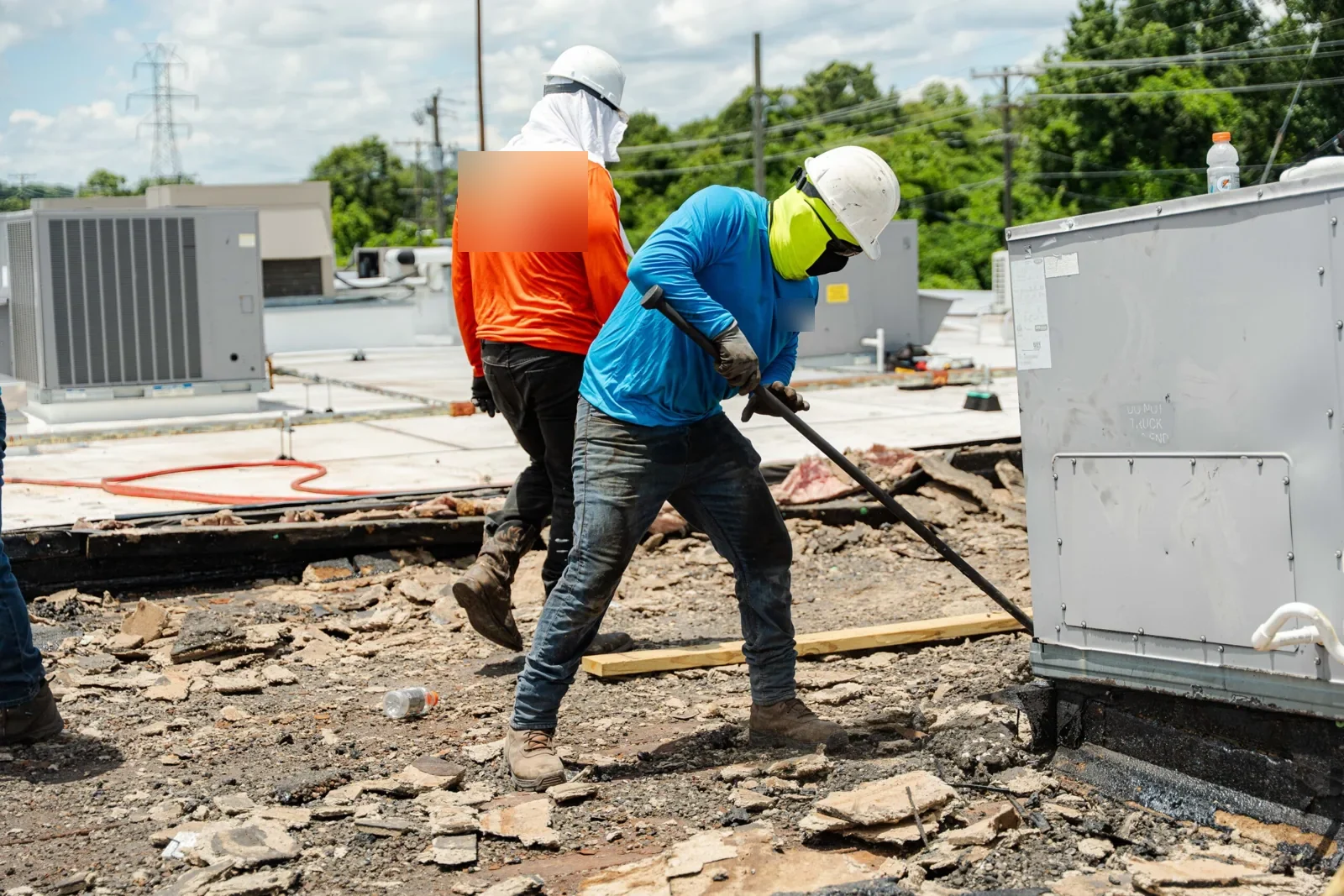
Evaluate a commercial roof recover in Johns Creek with moisture testing, code review, drainage checks, and a clear comparison with full tear-off.
Can a new roof go over the existing one? That decision turns on layer count, moisture, deck condition, drainage, attachment, and the rules that apply to this project. We inspect and test those conditions through a commercial roof inspection before recommending a recover. In Johns Creek, a roof plan also helps match each detail to the building it serves. A second layer can save removal work when the existing assembly is suitable; it can also hide wet insulation or add weight where the structure and details cannot support it. In Technology Park Johns Creek, commercial properties range from low-rise offices to industrial buildings and healthcare facilities. The roof plan should identify which areas qualify, which need removal, and what evidence supports that line.
What is under the existing membrane?
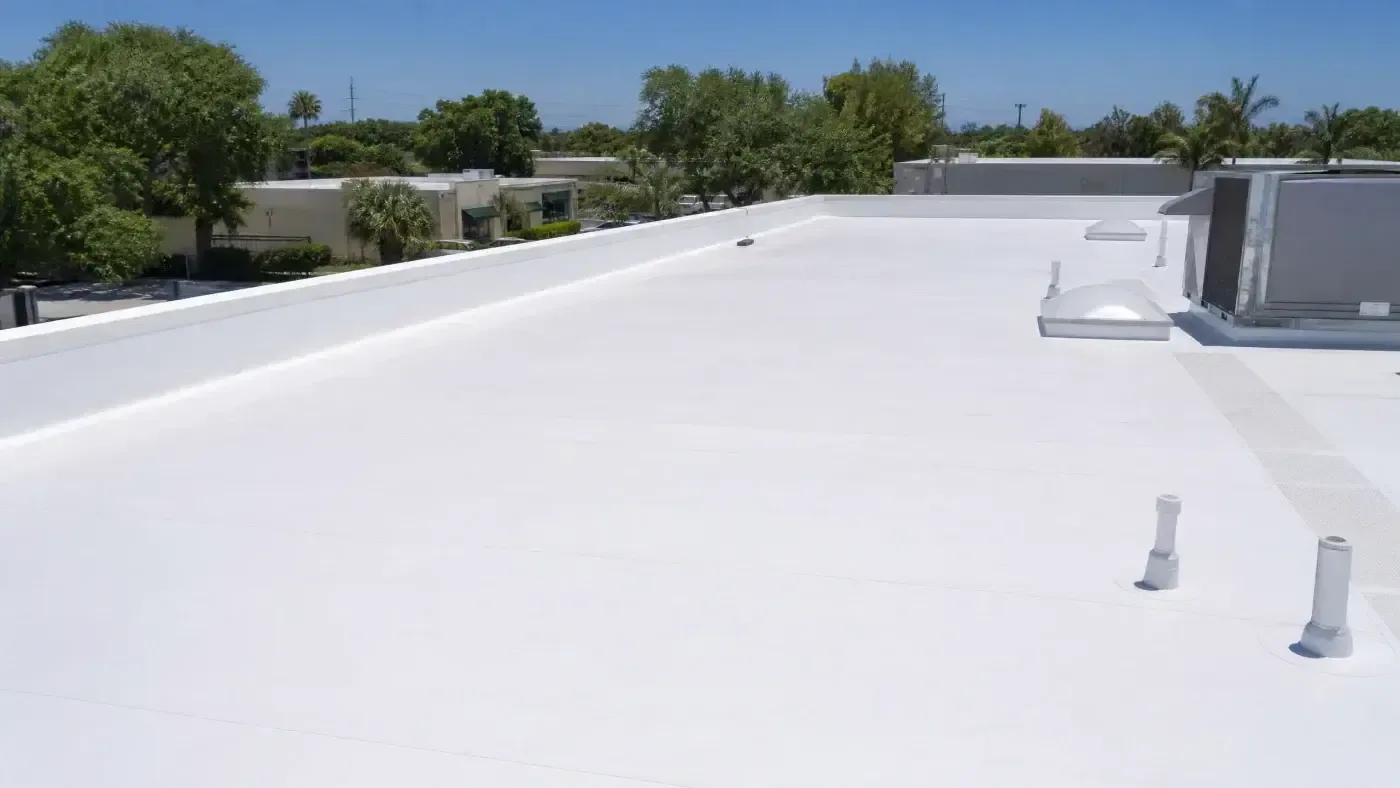
Commercial Roofing Services from Commercial Roofers Johns Creek.
A recover begins with the roof that is already there. We check the membrane, seams, flashings, penetrations, drains, edges, and any previous patching. A test cut confirms the layers and exposes insulation and deck at a selected point. Additional cuts may be needed where staining, soft areas, ponding, or repair history suggest moisture could be unevenly distributed. An infrared moisture survey can help locate temperature patterns after suitable conditions, but it does not replace a test cut when the assembly must be confirmed.
Johns Creek’s office, retail, industrial, and municipal buildings at Technology Park create different rooftop conditions. A mechanically crowded roof may need careful mapping of curbs and access routes; a simpler roof may still have isolated wet areas near a drain or perimeter. The written condition report labels the roof zones tested and records what was observed. It should not treat one dry sample as proof that the entire roof is dry. We use the findings to set the recover boundary and identify areas where tear-off is the safer scope.
When can a recover stay in scope?
The current roof must be stable enough to support the new assembly. Wet or deteriorated insulation, loose membranes, trapped water, soft deck, or failed attachment can disqualify a zone. The new system also needs secure fastening or bonding, sound transitions, workable edge details, and drains that remain at the proper height. If a new layer would bury a failed curb or create a drainage problem, solve that detail before covering the field.
A recover is not just a new sheet laid over an old roof. The specification must state how the assembly attaches, what insulation or cover board is added, how perimeters and penetrations are handled, and how moisture findings change the plan. Existing roof layers and project code requirements matter. Georgia’s statewide minimum construction rules currently adopt the 2024 International Building Code, amended for the state. Confirm the effective date and local project requirements with the building official before locking in the system. A full replacement may be the better option if the existing materials or deck do not provide a sound base.
Will the roof still drain?
Added layers can alter slopes, drain bowls, overflow heights, scuppers, and door or equipment clearances. We review the drainage path before work and identify low areas where standing water has been observed. The goal is to keep the finished assembly moving water to the intended outlets, not to conceal a recurring pond behind a new membrane. If a drain needs a sump, extension, or replacement, that scope belongs in the plan and estimate.
Atlanta climate normals record precipitation across every month, so drainage deserves attention beyond a single storm season. A roof with slow drainage can keep seams, flashings, and coating transitions wet longer than intended. The inspection notes each drain and overflow, visible obstructions, and any limitations that prevent confirmation of the path. If water entry has occurred, our leak tracing service can help separate a roof opening from water traveling within the assembly. Weather context guides inspection; it does not prove damage on a specific roof.
How will a recover affect the building?
A recover can reduce tear-off debris and disruption, but it still involves deliveries, rooftop equipment, fastening or adhesive operations, and temporary protection. We plan access, staging, noise, odors where adhesives are used, and any shutdowns with the site contact. The sequence should keep drains clear and avoid leaving an exposed edge when a weather change approaches. For medical offices and employers around Emory Johns Creek Hospital, the work window should account for active entries, clinical operations, deliveries, and critical equipment without assuming every building follows the same schedule.
Hot conditions and afternoon storms can shape daily production. Atlanta’s long-term normals include many days over 90 degrees and rain in every month, while the actual forecast and roof-surface temperature guide each workday. Cold mornings can change adhesive handling, so installation instructions and measured conditions govern whether work proceeds. The schedule should identify dry-in points, weather holds, and who receives notice when a zone cannot close as planned.
How should the options compare?
Compare recover and tear-off scopes on the same roof zones and assumptions. Cost depends on testing, preparation, cover board, attachment, flashing, edge metal, drain extensions, equipment coordination, staging, and disposal if any sections need removal. The proposal should say how many test cuts are included and what happens when a sample shows wet material. A defined allowance and approval process make the cost of concealed conditions easier to evaluate.
In Johns Creek Town Center, planned redevelopment includes a 192-acre business park with future retail, hospitality, offices, and housing beside established business uses. These different uses create varied access and work-window needs; they do not determine what roofs can take a recover. We base eligibility on each building’s layer count, test results, and roof-zone condition. Before comparing totals, ask us to identify the accepted existing assembly, removal allowances, exclusions, and repair boundary. That keeps the proposal tied to observed evidence.
What should the record show?
Before installation, the record should include test locations, moisture findings, layer count, deck observations, drainage review, selected materials, fastening or bonding details, and any removals. If a concealed condition changes the scope, the owner should see the affected location and proposed correction before it is covered.
At closeout, we review seams, flashings, curbs, perimeters, drains, and completed transitions. The record identifies work completed, any approved changes, and areas that remain outside the recover. Send a roof plan, prior repair notes, known leak locations, and access restrictions with the request. We will inspect the assembly, explain which zones support a recover, and price removal where evidence points to a different boundary. A recover recommendation is useful only when the owner can see the condition behind it.
Commercial Roofing Questions
How many test cuts are needed before a recover?
The number follows the size and variation of the roof and the evidence found during inspection. We label each cut and explain what it confirms, so a limited sample is not presented as proof about untested sections.
Can wet insulation stay under a new membrane?
Wet insulation should be located and removed or otherwise addressed before it is covered. Moisture can reduce thermal performance and affect the bond or attachment of the new system. We mark the affected boundary and test nearby material when needed to determine how far the condition extends.
Does Georgia code permit a roof recover?
The project’s existing assembly and applicable code both matter. Georgia has adopted the 2024 edition of the International Building Code with state changes. The local building official can confirm when those provisions apply and whether project-specific conditions affect the proposed assembly. We check those requirements before setting the recover scope.
Will a recover fix recurring ponding?
A new membrane alone does not correct a low point or blocked drain path. We inspect slopes, drain bowls, overflows, and observed ponding, then include drainage corrections where the design and conditions call for them. We can include drain and scupper work when the inspection identifies a needed correction.
When should I choose full tear-off?
Removal is usually the stronger option where moisture is widespread, the existing layers are unstable, the deck needs extensive work, or the assembly cannot accept another layer. A replacement review compares those findings with the recover boundary and identifies the scope each option requires.
Back to Commercial Roofing Services, or request a roof assessment and call 555-555-5555.