Commercial roofing in Johns Creek, GA
Repairs, replacement and maintenance
Commercial Ponding Water Roof Repair in Johns Creek, GA
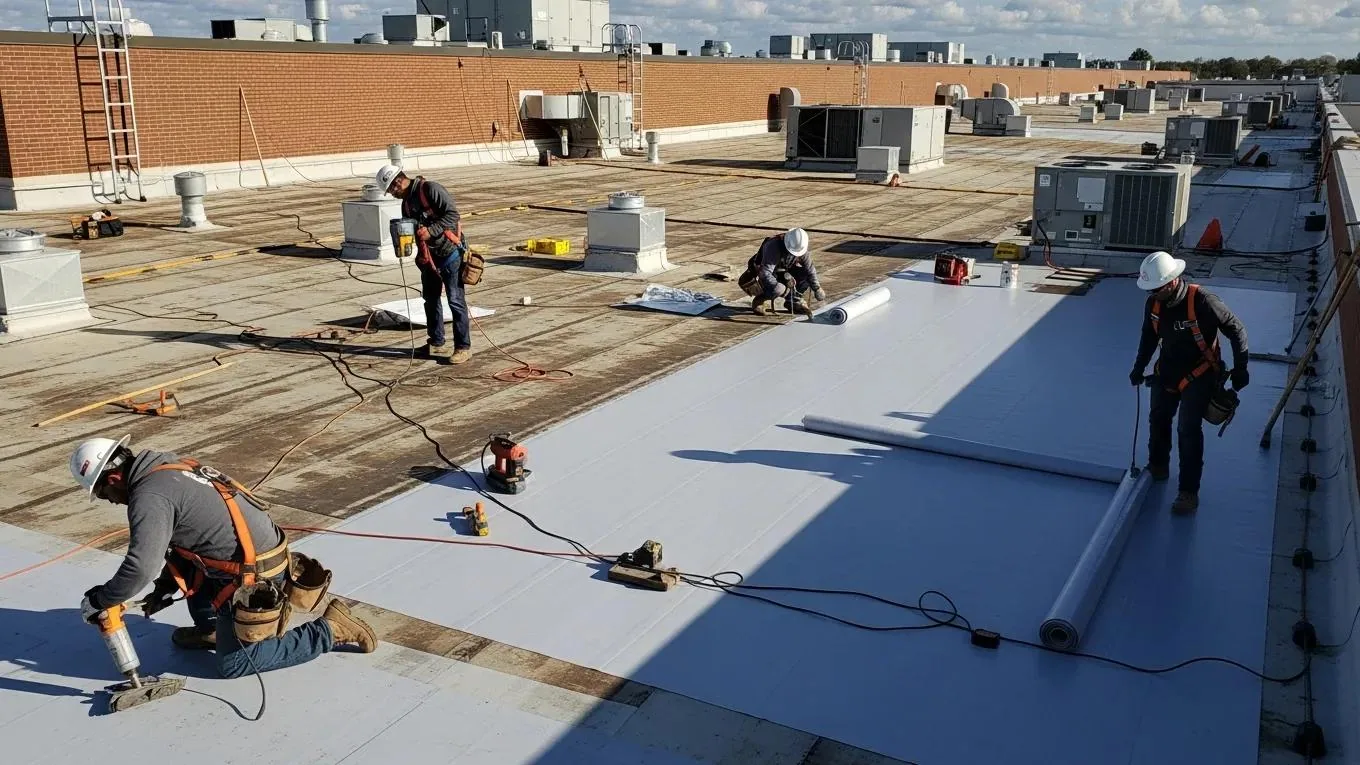
Commercial roof drainage inspections and ponding-water repairs in Johns Creek, GA, with measured observations, outlet checks, and clear correction scopes.
Does water remain on the roof after the rain has stopped, or is a ceiling stain returning near a low area? Ponding deserves a field review because a blocked drain, depressed deck, deflected structure, or failed flashing can look similar from above. We measure and document what we find before recommending a correction. Johns Creek's Technology Park and Town Center include varied commercial buildings; our regional routes also reach Suwanee, Duluth, and Alpharetta. The building's roof plan and drainage layout determine where the inspection begins.
How do you determine why water is staying?
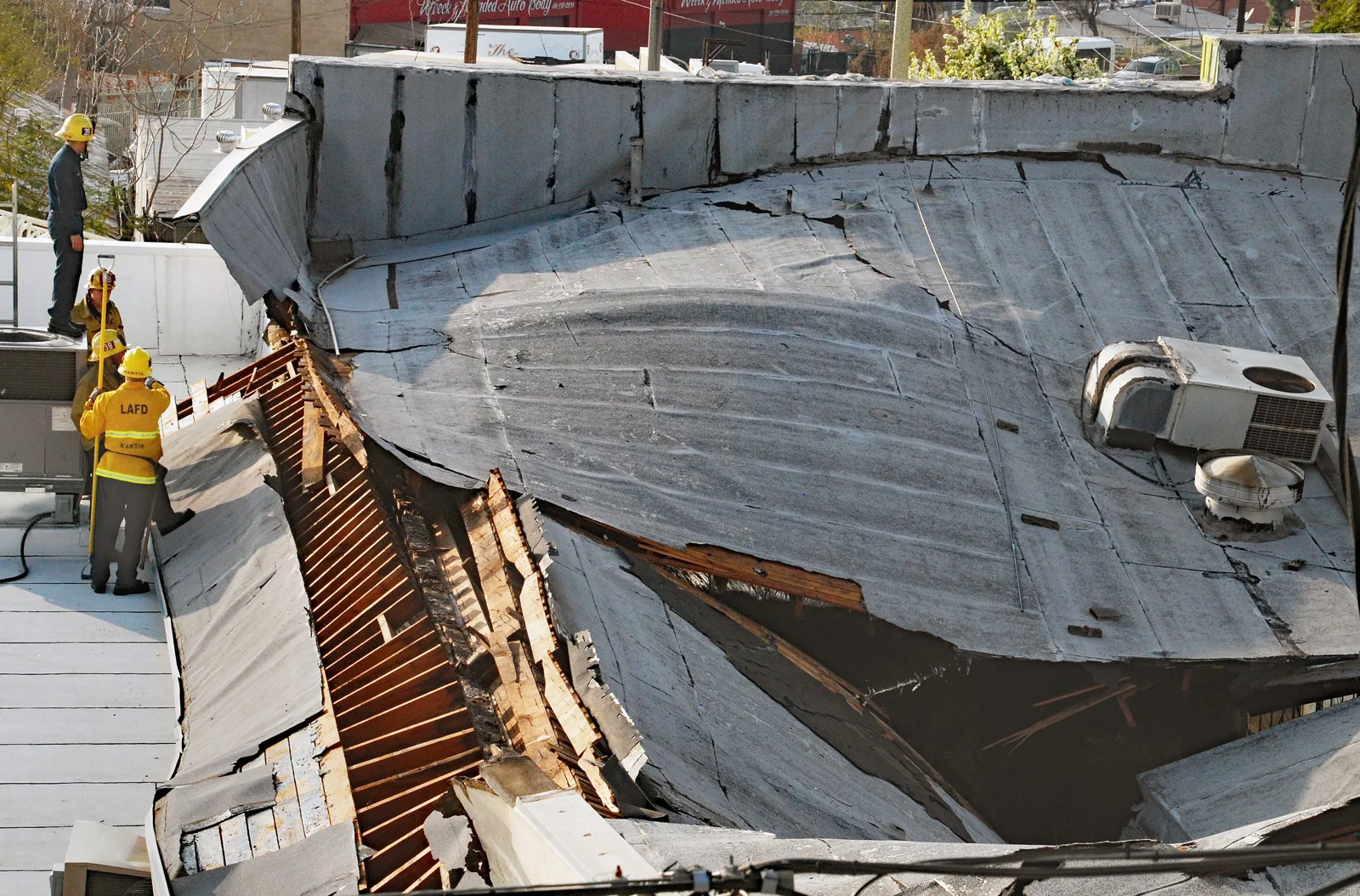
Roof Damage Repair from Commercial Roofers Johns Creek.
We identify the roof section, observe the surface condition, locate drains and overflows, and trace the route water should take. A single visit may show residual water but not its full depth or duration, so the report records conditions and timing. We look for debris at strainers, blocked outlets, displaced drain bowls, membrane wrinkles, patched depressions, and signs that a low area extends beyond the visible water. Where needed, compare the roof surface with plans and structural information supplied by the owner.
A commercial roof inspection can map low areas and drainage details. If moisture may have entered the assembly, an infrared moisture survey may help prioritize locations for confirmation. The instrument reading is a lead for further checking, not a stand-alone diagnosis. We state whether a direct test was performed and what it showed. For a larger roof, a roof-zone sketch helps a facilities manager compare the same low area over later visits.
Runoff routes can matter at grade. If water leaves a scupper above a loading area, public walk, or equipment pad, note the discharge and any erosion or staining. That observation may require a separate correction to the roof outlet or site drainage. Clearing an obstruction is not the same as repairing a low deck, and a repair proposal should name which condition it addresses. The owner can then decide whether additional building or structural review is appropriate before work starts.
What can be corrected at the outlet?
We inspect strainers, drain bowls, clamping rings, overflow outlets, scuppers, and nearby membrane transitions. Debris can be removed when access and site procedures allow, but a cracked component, failed flashing, undersized path, or damaged conductor needs a defined repair. A roof drain and scupper repair can address a verified defect at the outlet. The scope should state if another trade owns the downstream leader or storm connection.
Atlanta climate normals record precipitation in every month, so roof drainage remains an operating concern throughout the year. We look for repeated blockage and maintenance access before proposing a one-time correction. If a drain sits beneath rooftop equipment or close to a screened area, the facilities team may need to arrange access or temporary shutdown. Note the drain ID, roof zone, observed obstruction, and whether water moved after the outlet was cleared.
In some buildings, a second overflow is part of the protection strategy. Confirm its location and discharge route rather than assume it works because it is visible from the roof. If water is reaching an interior area before the overflow engages, inspect the elevation and nearby flashing, and record what can be verified. Any correction that changes discharge should account for where that water will go at grade and who maintains the connected site system.
What if the roof surface is depressed?
A low spot can follow structural deflection, an uneven substrate, compressed insulation, accumulated patch layers, or movement around equipment. The roofing inspection can document the visible profile, wet materials, membrane condition, and nearby drains. It cannot establish structural capacity from surface observation alone. If the roof or deck appears to move, the owner should involve the responsible design professional before roofing work changes loading or conceals the condition.
Before filling a depression or adding a tapered assembly, confirm the existing roof layers, drainage plan, drain height, and nearby roof edges. Added material can raise transitions and affect door thresholds, equipment curbs, or overflow elevations. If the proposed correction changes the assembly, a roof replacement review may be more appropriate than repeated local fill. We describe the condition and options but do not treat an untested substrate as sound.
A localized repair can be considered where the depression is stable, the surrounding assembly is dry, and the drain detail can be restored. If moisture is found below the membrane, document its boundary before removing material. The repair scope should distinguish removal, drying or replacement of wet components, new slope material, and restoration of the drain interface. That gives the owner a measurable correction and a clear point where additional concealed damage requires approval.
When should a ponding concern be rechecked?
Atlanta's annual climate-normal precipitation is near 50 inches. That pattern makes the date and duration of a roof observation useful. A photograph soon after a storm may show water that is draining normally; another check later can tell whether it persisted. We note rainfall timing from the owner's report and compare it with the actual outlet and low area, without using a regional average to diagnose one roof.
Summer heat and winter freeze periods can change the conditions crews face. The same climate record averages days below freezing as well as hot days, so material application and roof access need to match actual surface temperature. If a coating or sealant is proposed near standing water, confirm that the product and substrate are suitable for the exposure. Roof coating restoration is not a substitute for resolving a drainage defect that keeps water in place.
Johns Creek plans Town Center as a mixed-use redevelopment on a 192-acre former business park. Nearby construction can change access or temporary runoff controls, but those site changes do not establish a roof cause. For a property near Johns Creek Town Center, confirm current access and the building's own drainage route before mobilization.
What should the drainage repair record show?
Keep the measured area, drain identification, photos before and after work, test results, materials, and any flow observations. Note whether a blockage was cleared, a flashing detail repaired, or a broader low area addressed. If a downstream storm system or structural condition was excluded, list it plainly. A later facilities employee should be able to find the outlet and distinguish completed work from a pending investigation.
Owners with sites near Technology Park Johns Creek or Medlock Crossing can provide roof plans and maintenance logs before the visit. A property management team can help arrange keys, tenant notice, and roof access. The inspection remains specific to the building, including drain count, outlet route, and any restricted roof zone.
If ponding has appeared across several buildings, compare records without assuming a common cause. A roof condition report can retain photos and findings for each roof. A separate flashing failure review may be needed if water enters at a seam or wall transition rather than at the low point. A membrane puncture repair is appropriate only when the roof surface shows a confirmed opening. The final scope should state what was confirmed and what needs another trade or test.
Commercial Roofing Questions
Is any water left on a roof a defect?
Not by itself. We record how much water is present, when the roof was viewed, whether outlets were clear, and whether the area persists on a later check. The assembly and drainage details guide the correction.
Can clearing a drain solve ponding?
It can restore flow when an obstruction is the cause. If the deck is depressed, the drain detail is damaged, or water remains after clearing, those conditions need separate evaluation.
Should a low area be filled with roofing material?
Only after the existing layers, surface condition, drain height, and overflow path are understood. Added material can affect transitions, so the proposed correction should be reviewed against the roof plan.
Can ponding lead to an interior leak?
A roof pool can keep a vulnerable seam or flashing exposed, but the source must be inspected. We trace the reported path and document tests and areas that were not reached.
Back to Roof Damage Repair, or request a roof assessment and call 555-555-5555.