Commercial roofing in Johns Creek, GA
Repairs, replacement and maintenance
Commercial Roof Drains and Scuppers in Johns Creek, GA
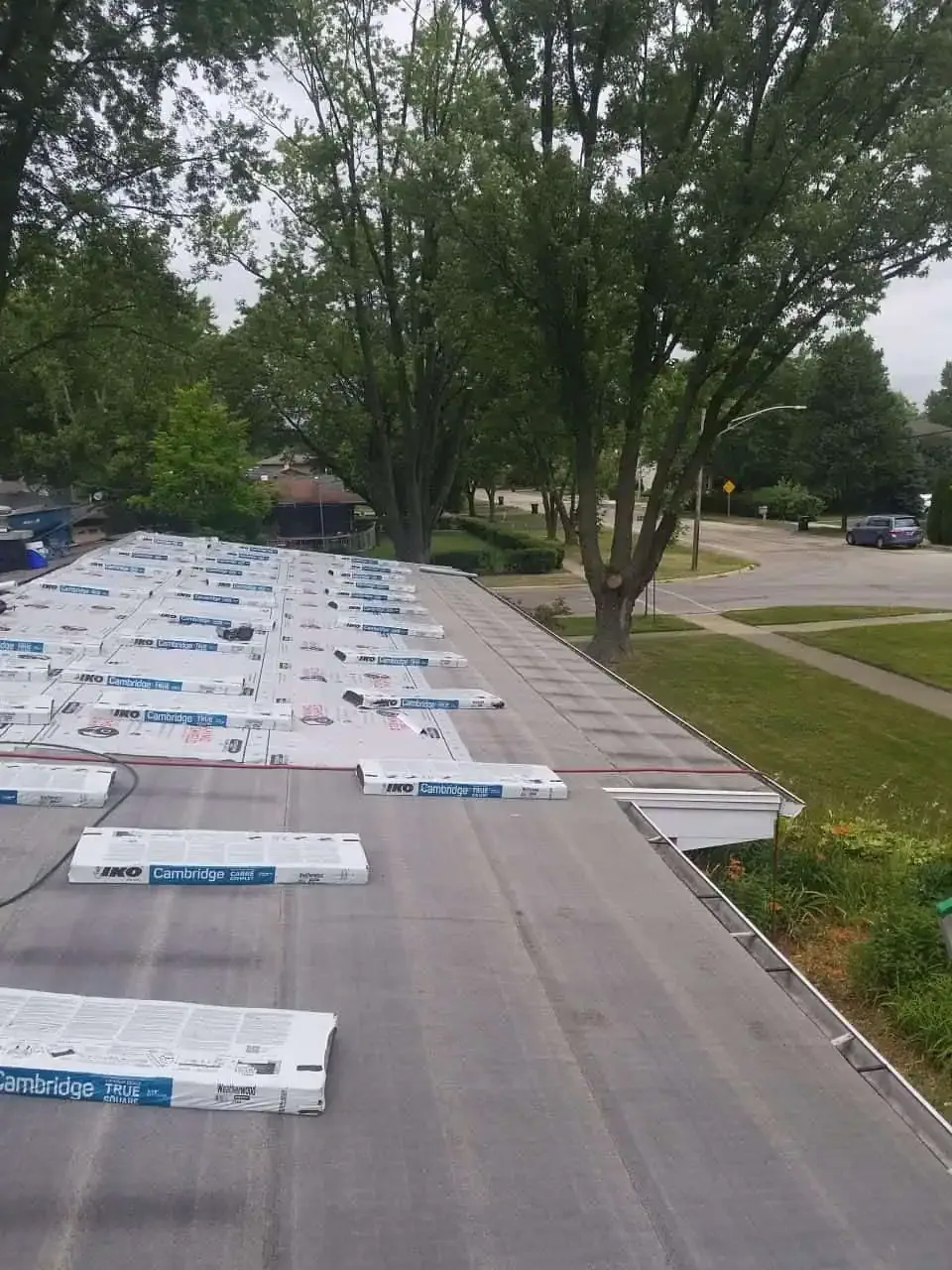
Correct commercial roof drainage in Johns Creek with drain, scupper, cricket, and ponding checks tied to roof zones and the observed water path.
Where does water stop moving across the roof? We inspect drain bowls, strainers, scuppers, overflow points, crickets, and nearby membrane details to find the restriction or low area. A blocked outlet is different from a roof that slopes away from the drain, and both differ from a leaking drain flange. The correction starts with the water path and the condition around it. In Johns Creek, year-round rainfall makes drainage a maintenance issue in every season, but each roof needs its own slope and outlet review before work is priced.
Are the drains and scuppers clear?
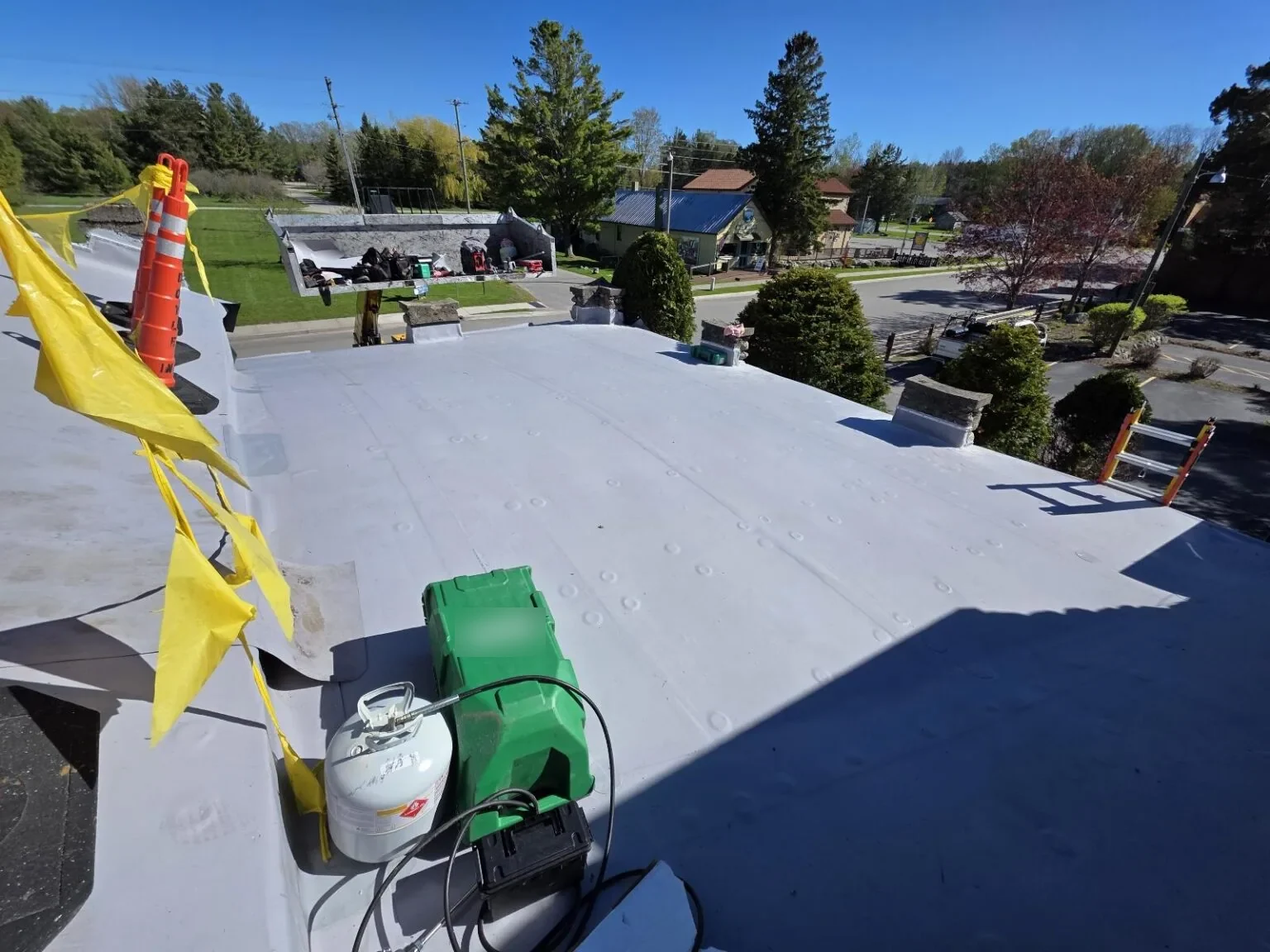
Commercial Roofing Services from Commercial Roofers Johns Creek.
We check whether each accessible roof drain has a clear inlet, secure strainer, intact clamping ring, and membrane termination that directs water into the bowl. Debris, leaves, roofing scraps, or sediment can slow flow. A scupper should be open, firmly flashed, and set to discharge outside the wall into a functioning downspout or drain leader. We photograph obstructions and note outlets that could not be reached or tested.
Clearing debris may restore flow, but a damaged drain body or loose flange needs repair. We inspect the membrane around the outlet for cracks, separation, and patch edges that collect water. For a curb or penetration near a drain, the detail must remain watertight after the drainage work. A commercial roof inspection can include the outlet review in a larger condition record. If the water path is unclear, a leak trace can help determine whether water is entering at the drain or another nearby detail.
Does the roof direct water to an outlet?
Standing water can point to a blocked outlet, a local depression, inadequate slope, a deflected deck, or an added layer that changed the drain height. We check how the surface falls toward drains and scuppers, then mark where ponding begins and ends. A cricket or tapered insulation can redirect water around equipment or toward an outlet, but its height and transitions must match the surrounding assembly.
A stain alone does not call for a new slope system; the inspection maps the low point, outlet, and surface condition first. The inspection establishes the observed low point, outlet location, surface condition, and any issue that requires a deck or structural review. If a recover or overlay was installed, the drain bowl and overflow elevations need to be checked against the added thickness. A recover evaluation should include drainage details before a new assembly changes the water path. The proposal identifies whether the correction is cleaning, flashing repair, a cricket, tapered insulation, or a larger design decision.
What can ponding do to the roof?
Water that remains in a low area adds prolonged exposure to seams, flashing transitions, and surface defects. It can conceal a split or slow a leak investigation. Ponding may also collect sediment that blocks a nearby drain. We record the depth and footprint where practical and check whether the outlet is clear. A roof with recurring water should be revisited after cleaning or correction to confirm that the path changed.
Atlanta climate normals show precipitation in each month and an annual total near 50 inches. That local pattern supports regular drain checks, but it does not mean water remains on every Johns Creek roof. At the Johns Creek Town Center district, planned mixed uses bring different roof forms and site operations; drainage work still follows the specific roof plan, outlet layout, and observed low areas. If ponding is localized, we mark its boundary and compare a small correction with broader tapered work before selecting a scope.
Which correction fits the condition?
A drain correction may include clearing an inlet, resetting a strainer, repairing membrane at a flange, replacing a damaged bowl, or adjusting the surrounding slope. Scuppers may need new flashing, an unobstructed opening, or a connected downspout that carries water away from the wall. A cricket may be framed or tapered to guide water around a curb. We describe which materials meet the existing system and how the repaired area ties back into the roof.
Cost depends on outlet count, access, membrane layers, plumbing connections, roof buildup, and the size of the area needing taper or cover board. If the drain body connects to interior piping, the owner may need coordination with a plumbing contractor. We list that interface in the proposal and do not price a pipe correction based solely on a roof inspection. A tapered insulation scope can define the roof slopes, while a repair scope covers the membrane and flashing at the outlet.
How is the work sequenced?
Before work begins, we confirm roof access, below-roof spaces, interior leak reports, and any restrictions around active equipment. Drain work can temporarily change water flow while the bowl is open, so the work window should include protection and a plan to close the area the same day when conditions allow. We keep materials and debris from entering the drain or downspout. If the outlet connects to an occupied area, the site contact should know when the work will interrupt normal drainage.
Rain can change the repair sequence, and wet surfaces may prevent cleaning, bonding, or flashing work. We inspect the work area before resuming after a weather hold. On a multi-building portfolio near Suwanee Gateway, each roof plan should keep outlet and downspout identifiers tied to the correct building. The district contains industrial, office, and retail uses, so loading access and occupied schedules may differ across properties. A separate record avoids confusing one building’s outlet condition with another’s.
How can the owner verify the correction?
We document the outlet before and after work, show the repair boundary, and record what was cleared, replaced, or regraded. A controlled water check may be useful when safe and appropriate, but it does not replace watching the roof after normal rainfall. The closeout record states any area that could not be tested and whether a later check is recommended.
Johns Creek businesses can use a roof condition report to track drainage findings, repairs, and repeat ponding locations. The owner can compare photographs with the roof plan and see whether the water path changed. If a drain was accessible but an interior pipe was not inspected, we identify that limit. Send the roof plan, ponding locations, leak reports, access restrictions, and decision timeline. We will inspect the outlet and surrounding zone, then define the correction that matches the observed condition.
Commercial Roofing Questions
Can cleaning the roof drains stop ponding?
It can help if debris is restricting an otherwise functional outlet. We inspect the drain bowl, strainer, nearby surface, and discharge route to determine whether cleaning addresses the condition. Low areas or damaged drain details may need a separate correction.
Do you repair the pipe connected to the roof drain?
We inspect roof-level bowls, clamping rings, flashing, scuppers, and visible downspout conditions. Concealed interior piping may require a plumbing contractor or separate investigation. The scope identifies that connection so a roof repair is not mistaken for pipe work.
Will a cricket eliminate water around rooftop equipment?
A cricket can redirect flow where the roof geometry and outlet path support it. We measure the low areas, curb position, and available slope before designing the correction. If deck deflection or structural movement is suspected, that condition needs review beyond a membrane-level fix.
How do you define a ponding area?
We map the visible footprint and depth where conditions permit, then note how long water remains after rainfall or cleaning. The survey also checks nearby drains and scuppers. A single image shows conditions at one time, so a follow-up view can help confirm recurring water.
What should we send before a drainage inspection?
Provide the roof plan, outlet locations, leak reports, access rules, and photos of any recurring low area. Tell us whether interior piping has been checked. We can then plan a focused walk and identify which corrections need another trade or test.
Back to Commercial Roofing Services, or request a roof assessment and call 555-555-5555.