Commercial roofing in Johns Creek, GA
Repairs, replacement and maintenance
Commercial Roof Coating Restoration in Johns Creek, GA
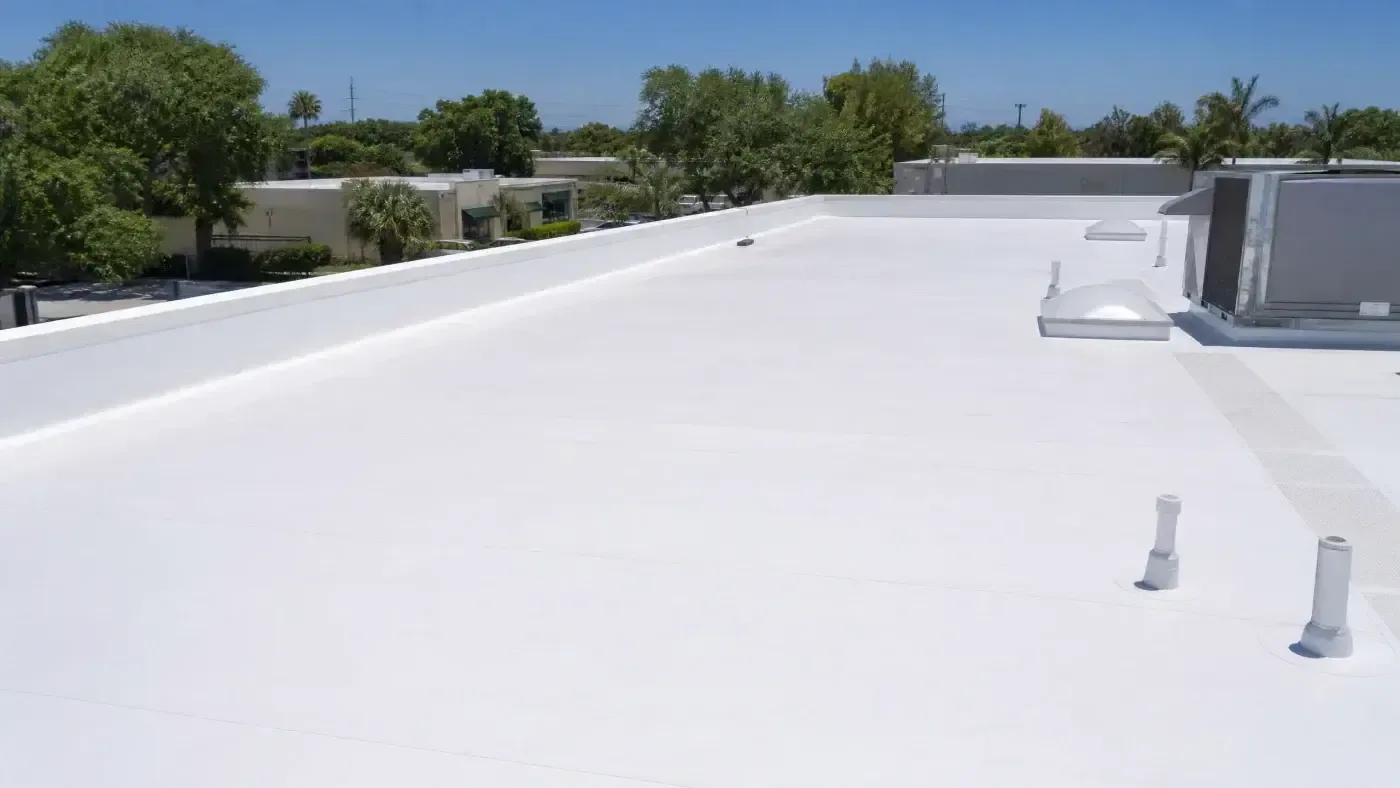
Evaluate commercial roof coating restoration in Johns Creek with substrate checks, adhesion testing, detail repairs, and a clear limit for unsuitable areas.
Can the existing roof serve as a sound base for a restoration coating? We inspect the membrane, seams, flashing, drains, and wet areas before recommending a coating. The surface must be stable, prepared, and compatible with the selected system. A coating may renew a roof that qualifies, but it cannot secure loose edges, dry saturated insulation, or restore a failed deck. Johns Creek buildings include office, retail, industrial, and healthcare uses; the restoration boundary must follow the condition of each roof zone and the work access the building can support.
What condition must the roof be in?
Commercial Roofing Services from Commercial Roofers Johns Creek.
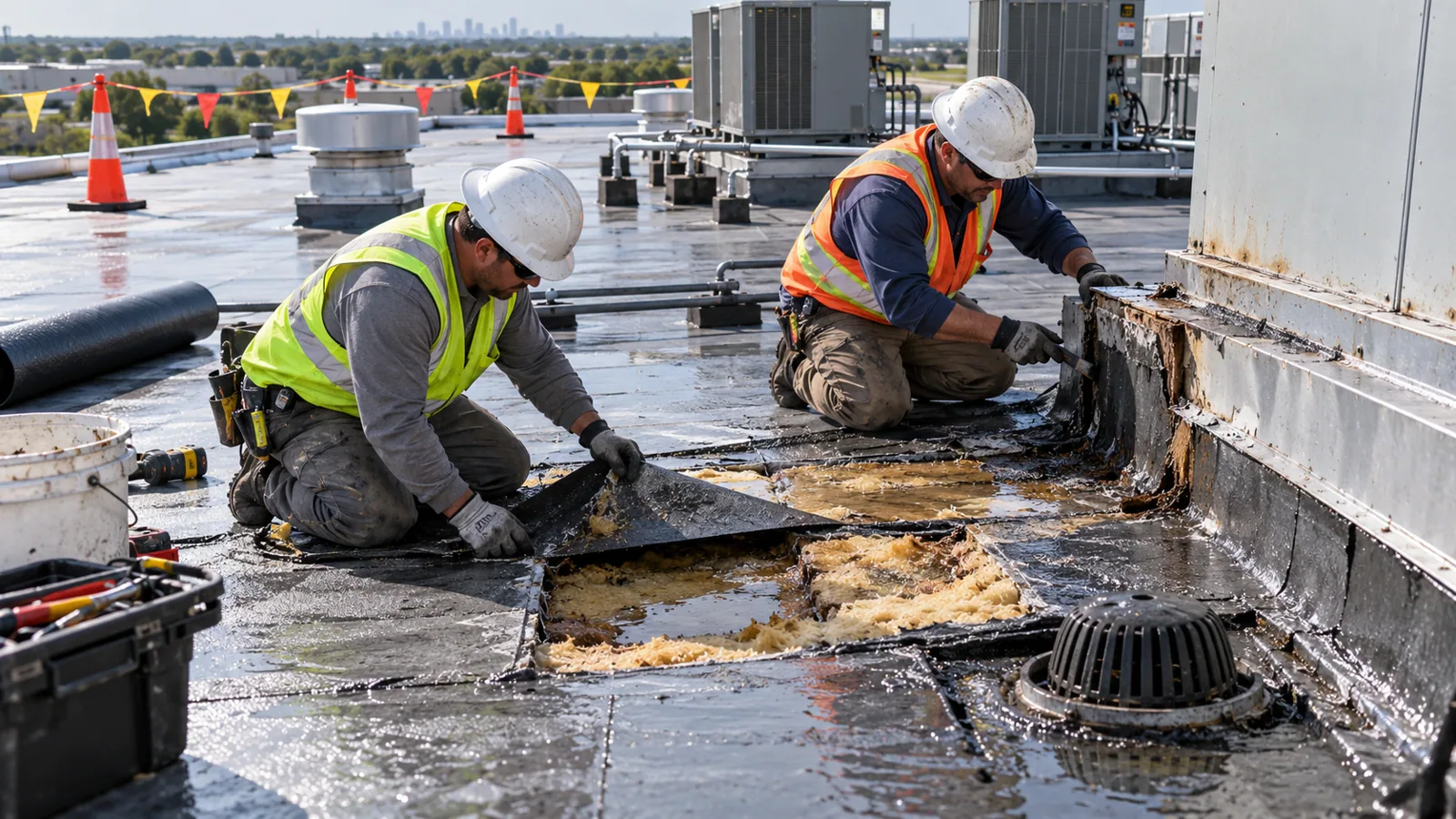
We look for open seams, loose terminations, cracks, corrosion, ponding, punctures, previous coatings, and membrane areas that have lost adhesion. A visual review may identify defects, but selected adhesion tests can show whether a coating bonds to the prepared surface. If the assembly may hold moisture, infrared mapping or test cuts can help determine whether wet insulation is present. Coating over wet or unstable material can trap a condition instead of correcting it.
The survey should separate areas suitable for restoration from areas needing repair or removal. We mark transitions, penetrations, curbs, drain bowls, and perimeter details because these locations need compatible reinforcement and preparation. Our commercial roof inspection can document the overall roof condition before coating is priced. Where test results confirm moisture, the owner may need selective replacement or a recover evaluation for dry areas rather than a coating over the entire roof.
Which coating system matches the roof?
Silicone and acrylic coatings differ in water tolerance, surface requirements, and application conditions. We compare the existing roof material, slope, drainage, exposure, and planned maintenance before selecting a system. The proposal should name the coating type, primer where required, reinforcement fabric or treatment at details, and the specified dry film thickness. It should also identify where coating is excluded, such as wet insulation, loose membrane, or details that cannot be prepared.
Compatibility is specific to the existing assembly and product instructions. A sample area or adhesion test can resolve uncertainty before full application. Adhesion depends on the existing membrane, prior coating chemistry, surface condition, and preparation; confirm compatibility before specifying the new system. The owner should see how seams, curbs, penetrations, drains, and edge transitions will be treated as well as the field surface. If the proposed system has a warranty, the written terms and required maintenance need to be reviewed separately from claims about the coating’s expected performance.
What preparation comes before application?
Surface preparation often determines whether restoration work can proceed. We remove dirt and loose material, address biological growth or contaminants when present, repair defects, and let cleaned areas dry as the product instructions require. The crew checks that the substrate is secure and that repair materials are compatible with the coating. Coating an unprepared seam or applying product over standing water can leave the original failure active beneath the new layer.
We define the preparation steps for the roof’s actual condition and note any area where access or equipment limits the work. On a building near Technology Park Johns Creek, active rooftop equipment and multiple penetrations may require section-by-section coordination. Work around HVAC curbs, conduits, and pipe supports needs enough clearance to prepare and seal the detail without coating moving components. If equipment cannot be moved, the scope should describe how the boundary will be finished and what remains the owner’s responsibility.
When can the coating be installed?
Each coating has limits for surface moisture, air temperature, substrate temperature, and time before rain. We schedule cleaning, repair, and coating steps around those requirements. Atlanta’s climate normals show rain in every month and frequent hot days. The local pattern makes weather checks part of the schedule, but actual conditions on the roof decide whether application can proceed. If a shower interrupts the work, we protect the prepared area and inspect it before resuming.
Heat can shorten safe rooftop work periods, while cold mornings can change cure time or adhesion. We check the surface and forecast for each work window rather than assume one season is automatically suitable. The plan identifies how much roof can be prepared and coated before protection is needed. On an occupied site, we also coordinate odor, noise, roof access, and equipment operation. An application date should follow the condition of the surface and the manufacturer’s written limits, not simply the calendar slot.
How should restoration be phased?
Johns Creek Town Center is planned as a broad mixed-use redevelopment with retail, office, hospitality, and residential functions. A roof project in an active commercial district may require phased access, clear delivery routes, and notice to occupants. That context can inform the staging plan, but it does not show that any particular roof is ready for coating. We inspect each building, identify independent roof zones, and set a work sequence that allows each prepared area to be completed and protected.
Nearby North Point in Alpharetta is a regional activity center with a large retail and dining area. A property team coordinating multiple locations can use consistent coating specifications while keeping adhesion findings and exclusions tied to each asset. If one roof section fails testing, that area should not be silently included under a general restoration allowance. We can document separate zones, compare coating with replacement where needed, and track later work through a condition report. That gives the owner a record of why the coating boundary was selected.
What should the final record show?
Closeout should identify the coating product type, preparation, repaired details, application zones, weather conditions, and any area excluded from the work. Photos should show representative seams, penetrations, drains, and edge transitions after application. We record when an area was coated and whether it received the specified coverage. The owner also needs the product maintenance instructions and a clear contact for reporting a concern.
A coating changes the surface but does not remove the roof assembly beneath it. Future inspections should look for adhesion loss, splits, drainage blockage, and movement at details. If water entry returns, we trace the route rather than assume that more coating is the answer. Send the roof plan, known leaks, previous coating history, access restrictions, and project timeline. We will inspect the substrate, identify test areas, and price restoration only where the roof can support the proposed system.
Commercial Roofing Questions
Can a coating be applied over any commercial roof?
No. The existing membrane, adhesion, surface condition, drainage, moisture, and product compatibility determine whether coating is suitable. We inspect and test representative areas, then mark the zones that qualify. Wet insulation or loose material needs a different correction before coating is considered.
Will a coating correct ponding water?
A coating follows the roof surface and does not automatically change its slope. We inspect drain paths and low areas, then identify drainage corrections if they are part of the project. The proposal should explain how standing water will be handled before application.
How do you know the coating will adhere?
We review the existing material and prepare a test area when compatibility is uncertain. An adhesion test shows how the selected primer and coating behave on that substrate after preparation. The method and test location belong in the scope so results apply to the intended roof zones.
Can coating work continue if rain is expected?
The surface and forecast must fit the product’s application and cure requirements. We schedule work in sections that can be completed and protected within the available weather window. If conditions fail those limits, application pauses and the prepared roof is checked before work resumes.
What happens to areas that fail the coating tests?
We identify them as excluded zones and price the needed repair or removal separately. The owner can compare localized corrections with a wider replacement plan without coating over an unstable area. Each boundary is tied to an observed or tested condition.
Back to Commercial Roofing Services, or request a roof assessment and call 555-555-5555.